Showing posts with label bygones. Show all posts

Tuesday, October 20, 2009

Hoffman Kilns


KRIS DE DECKER writes about the development of the technology of continuous brick firing in the late 1800s, in the latest online article in Low Tech Magazine. For salvage enthusiasts this mag is great antidote with articles like 'Cargo ships, then and now' and '12 small wind turbines put to the test' or 'How to make everything yourself: online low tech resources'.

Low Tech Magazine: Hoffmann Kilns by Kris De Decker

Tuesday, August 11, 2009

Good crowds and good money at Gaze architectural


Gaze Auctioneers, Diss Norfolk

Gaze architectural furnishings and statuary sale on Saturday 8 August 'drew a large crowd' according to Carl Willows head auctioneer at the sale. He was extremely pleased with the results and said, "Both vendors and buyers went away happy. In excess of eighty per cent of items sold and sold for good money.

"To start with york stone is making ridiculous money! A single york stone flag approx 50" x 66" x 2" made £460 and another flag approx 65½" x 62" x 2" thick made £600. Bricks made 80p which is good for us.

"A surprise lot was a crown chimney pot which sold for £260 to everyone's amazement. There was a fierce battle between one buyer in the auction room and another on the phone. Eventually it sold to a private buyer from Kent. The same phone bidder brought the Coalbrookdale cast iron fern pattern corner umbrella stand marked CB Dale Co, with lozenge for £380 which I personally think is a bargain.

"A good lot was the set of four sandstone pier finials in the form of pine cones from Spixworth Hall each approx 24"high x 15"wide. These came with a great provenience as the consignee had photos of the finials at Spixworth Hall in Norwich, which has since been demolished in the 1950's. These sold to the trade for £1,900 which I was happy with as I had estimated them at £1,500 hoping that they would reach that high, but obviously they have a few more miles in them yet."

Gaze


Above: A set of four sandstone pier finials in the form of pine cones from Spixworth Hall each approx 24"high x 15"wide, sold for £1,900.


Above: A Coalbrookdale cast iron fern pattern corner umbrella stand marked CB Dale Co, with lozenge, sold for £380.


Above: A crown top chimney pot, sold for £260.

Wednesday, July 22, 2009

The late Les Oakes collection

Thimbleby & Shortland Auctioneers, Reading

Thimbleby & Shorland are holding a reduction sale of the late Les Oakes collection. To be held at Hales View Farm, Oakmoor Road, Cheadle, Stoke, Staff, ST10 4QR on Wednesday 29th July at 10am.

Les Oakes was somewhat of a celebrity in his area, born in 1938 at Lower Grange Farm, Cheadle, Staffordshire. At the age of 7 he was attending auctions with his Grandfather buying and selling horse-drawn vehicles and memorabilia, he was also buying and selling pigeons and ferrets from his school locker.

At the age of 11, whilst attending Cheadle Secondary Modern he had, unbeknown to his father, amassed over 70 horse-drawn vehicles and stored them at various local farms in and around Cheadle where he worked in the evenings and at weekends to pay for the storage costs.

To make the money to enable him to buy his vehicles and memorabilia he built wooden sheds out of ammunition boxes and sold them to the people of Cheadle and the surrounding areas. He also ran an Architectural Salvage business reclaiming various items from demolition sites which he sold and also re-used in his buildings at Hales View Farm as and when further storage facilities where required for his ever growing collection.

He carried on attending auctions and increasing the size of his collection up until his tragic death in 6th September 2000 when returning from an auction. By the time Les passed away his collection consisted of approximately 600 horse-drawn vehicles of various sizes and types including Gypsy Caravans, stationary engines and vintage vehicles and memorabilia from the past 100 years which is now held in a private museum at Hales View Farm.

PDF of catalogue

Image gallery of some of his collect

Friday, July 03, 2009

Gaze Rural & Domestic Bygones

Gaze, Diss Norfolk 04 July 2009
Over 1000 lots auctioned by Carl Willows at Gaze auction house.


Above: Lot 6293. A Singer 46K circa 1900 in original bentwood case, excellent Ottoman Carnation decoration, Serial No P362774 it has an estimate of £55 to £65.


Above: Lot 6314. An enamel sign - Petter Oil Engines, estimated at £100 to £150.


Above: Lot 6338. A 15th Century and later tinker's barrow, spoked wheel driving a grindstone with various compartments housing tools and fittings, estimated at £600 to £800.


Above: Lot 6339. A run of three 1930's cinema seats, estimated at £80 to £120.


Above: Lot 7014. A bier - metal spoked wheels, estimated at £150 to £180.

Gaze Rural & Domestic Bygones catalogue

Tuesday, June 16, 2009

Salvaged canal dredger and antique Oxford Uni stonework regales Ronsons massive Salvo Fair stand


Above: Historic canal workboat blow dredger, Debris, will form the centrepeice of Ronson's stand, the biggest at Salvo Fair 2009

Knebworth, Herts UK - RONSON Reclaim of Gloucestershire is bringing a recently salvaged and restored a historic canal workboat blow dredger as the centrepiece to its 90ft long stand at this year's Salvo Fair. Known as 'Debris', she was orginally registered to British Waterways as No 386, and now has a Perkins 80hp diesel engine and will be fited with a bow-mounted blow dredger on a hydraulic arm. Also for sale on their stand, the largest at this years fair, will be antique stonework from the demolition of the Department of Physiology at Oxford University recently undertaken by Ronsons.

Salvo Fair
Ronson Reclaim

Thursday, April 23, 2009

Kirstie Allsopp at the Architectural Forum


Iskington, London UK - KIRSTIE Allsopp advises the Tories on housing policy but is more famous for making Location, Location, Location for Channel Four. Episode 2 of Homemade Homes has her creating two bathrooms for her seaside house in north Devon, making screen-printed wallpaper, a stained glass hanger and some candles. She buys doorknobs and glass specimen bottles from Jason Davies, whose cameo appearance is his small screen debut. Jason Davies will be exhibiting at this year's Salvo Fair.

Architectural Forum

Tuesday, March 31, 2009

The Inn Sign Society

"After 2,000 years of history, pub signs are dying and I think it is a shame," says David Cole, secretary of the Inn Sign Society. "When you walk down the road nowadays, you don't know whether it is a pub, a bank, a café or what it is. They all have the same lettering. It is sad that we are allowing a great tradition to slip away without anyone noticing."

The Inn Sign Society is planning to create an online archive of historic pub signs with the help of a grant from the Heritage Lottery Fund. The society believe there is an urgent need to establish an online archive of the old signs before they disappear. The country's 55,000 pubs are being reduced at the rate of 5 a day.

The pub sign started life with the Romans who used vine leaves to signify a tavern. By the 12th century, the naming of inns and pubs had became common practice and a picture was used to illustrate the name as the majority of the population could not read or write.

Two hundred years later, King Richard II passed an Act making it compulsory for pubs and inns to have a sign (his crest was a White Hart) in order to identify them to the Official Ale Taster and, ever since, those signs have reflected British life. Before the Reformation, pubs, many of which were attached to monasteries, frequently had religious names such as The Lamb And Flag (the flag was the cross and the lamb holding the cross was a symbol of the church) and The Cross Keys (the sign of St Peter, the gatekeeper to heaven). Later when Henry VIII split with the Catholic church, pubs changed to royal themes such as The Crown.

The most common pub name is still the Red Lion, named after King James VI of Scotland who, when he became King James I of Eng­land and Ireland in 1603, ordered that the heraldic red lion of Scotland be displayed on all buildings of importance, including pubs. Boar's Head, Baron Of Beef, Shoulder Of Mutton and Haunch Of Venison were all signs advertising particular foods that were served, while references to drink were common too with names like The Barley Mow and The Barley Sheaf (barley being a principal constituent of beer). Other names featured the title and crests of landowners who owned the building. They favoured royalty (Queen Victoria) and great warriors.

The increasing dominance of corporate chains in the licensing trade has contributed to the disappearance of traditional British pub names and a profusion of Slug And Lettuces, Rat And Parrots and Pitcher And Pianos.

The Inn Sign Society

Friday, September 12, 2008

Crane's Danilov bells are returned to Russia


Moscow Russia - SEVENTEEN bells from the St Danilov Monastery in Moscow have been returned by Harvard University. The peal or zvon, which is said to be the third finest in Russia, was used to herald the commencement of football matches at Harvard. Russian bells are dead hung with a system of tension ropes used to create the very distinctive Russian bellringing style (see video).

Charles Crane*, was the son and inheritor of the US Crane & Co radiator company, who had government connections and involvement with revolutionary movements in China, Slavic countries and Russian Bolsheviks, from whom he bought the Danilov bells for their scrap value when he heard they were to be demolished in 1930. He moved the bells tothe USA and donated them to Harvard where they were installed in the tower of Lowell House, a student dormitory.

"Monks have tried to recover the bells since the 1980s," Deacon Roman, one of the curators of the project to return the bells to the monastery, told Rossiiskaya Gazeta (Russian Gazette). "Harvard had a request but replied that it would be too difficult to take them down from the tower. Also, the university administration said the bells had become an important part of the campus and that the students had grown to love them. The biggest bell weighs 12 tons and they were worried that the bronze casting could be harmed during shipment." Their reluctance was assuaged with money and an offer by the Russians ti supply replicas. to part with the bells, Harvard was honored to see them returned to the St. Danilov Monastery, one of the cradles of Russian Orthodoxy, and glad to welcome a replica from the Vera factory in Voronezh, via the company known as Blagovest Bells.

* Charles Crane, a democrat and president of Crane & Co 1912-14, made twenty-three visits to Russia between 1890 and 1930. Richard Crane, his son and president of Crane & Co 1915-38, was assistant to Secretary of State Robert Lansing and US ambassador to Czechoslovakia 1918-21. According to the former ambassador to Germany William Dodd, Charles Crane "did much to bring on the Kerensky revolution which gave way to Communism." Crane returned to the United States when the Bolshevik Revolution had been completed and, although a private citizen, was given State Department reports of its progress, eg December 11, 1917 "Copy of report on Maximalist uprising for Mr Crane." which was sent by Maddin Summers, U.S. consul general, Moscow. Charles Crane was a friend and backer of Woodrow Wilson, and traveled to Russia in mid-1917 with the American Communist Lincoln Steffens, who was in touch with both Woodrow Wilson and Leon Trotsky, whose US passport was issued at the orders of Wilson. This suggests a link between Crane and Trotsky. Charles Crane's father Richard Teller Crane founded the firm of Crane & Co brass founders in Chicago in 1855, among whose early products were bells. By 1859 the firm was supplying steam heating valves for prisons and court houses. Crane & Co is still extant with a turnover of $2bn and 12,500 employees.

Entrepreneur Magazine Encyclopedia of Entrepreneurs By Anthony Hallett

Noahide News 326

Bells Ring in Spiritual Rebirth

Vera LLC, of Voronezh, founded 1989, the first to cast bells after Perestroika

Moscow News - St. Danilov Bells Return


Friday, February 29, 2008

New life for old clock

St Pancras, London Uk

Numerous historical pieces have been restored to St Pancras including a clock which once hung in the grand station. In the 1970's the clock was sold to an American collector for around £250,000. However, while it was taken down it fell and smashed into thousands of pieces. It was said to be beyond repair and so a retired train driver asked to buy the pieces for £25. Now more than 30 years on the clock has been fully restored.

Although, it was to badly damaged to be hung back in the station, so a replica has been made to put put in the same place as the original. Goldbury Coatings Ltd has coated the clock with Cromadex's 750 two pack epoxy primer and 600 two pack polyurethane topcoat. This offers product protection for up to 25 years.

Monday, December 10, 2007

3000 year old mummy has CT Scan


Above: The coffin of a 3,000 year old Egyptian Priest [pict from Metro]


Above: Mummy to undergo CT scan at the University College Hospital [pict from Times]


College Hospital, London UK

A hi-tech examination by the NHS of a 3,000-year-old mummy will seek to uncover more of the hidden secrets of ancient Egypt. An elaborate coffin concealing the body of a priest called Nesperennub is to undergo a computerised 'tomography' scan at University College Hospital in Central London. Radiographers and experts from the British Museum will spend up to four hours seeking to find out everything about the coffin and its contents. An earlier scan in London in 2004 revealed that Nesperennub was in good health at the time of his death – apart from a hole in his head.

Fiona Henderson, lead superintendent radiographer for UCH, said: 'This CT scanner was installed just two years ago, when the new hospital opened, and it provides incredibly detailed images, generating up to 6,000 pictures of the body. Up to 36 patients per day are scanned using this CT scanner but this will be the first time it has had such an old and illustrious “patient”. Nesperennub was a priest at Karnak, the religious complex near the ancient city of Thebes, where modern-day Luxor is situated. UCH staff gave the coffin a CT scan in 2004 but improved technology means a lot more can be seen now. John Taylor, a leading Egyptologist at the British Museum, said: 'Fully-wrapped Egyptian mummies still contain a lot of untapped information.'

Times
Metro

Monday, October 08, 2007

Nails - a brief New Zealand history (with links to Britain and the UK)


Above: Ladies nail hammering competion, Tututawa picnic.1910. Mc Allister, James, 1869-1952:negatives of Stratford and Taranaki district (photographic ATL archive)

When Captain James Cook arrived in the Pacific, he found the islands societies lacked iron. Iron nails were not required, as buildings were woven, lashed or pegged together. Throughout the Pacific, Cook traded iron nails for food and mama (status), while his men found other opportunities. Yet on 19 June 1770, when his ship Endeavour needed repair at Endeavour River, Queensland, the nails required were made as in Roman times - by a blacksmith forging each one.

Nails were of considerable value - not only in terms of money but also in utility to early European settlers. The New Zealand Company ship "Glenbervie" included in its 1840 voyage at least 20 kegs of nails (1 keg = 100lbs). Reportedly in 1843 the first house built on the Canterbury plains was constructed without iron nails, as these had been left in Wellington by mistake. 'Ranzau' - a house at hope near Nelson was built around 1844 with handmade nails that had travelled from Europe (probably Gemany), and ranged from 6 cm to 30 cm in length.

Mr Philip Valle travelled with his wife and six children on the 600 ton ship "Mary Anne" from England to Nelson, arriving on 8 February 1842 after a voyage of 137 days. The only loss of the voyage reported in the original passenger list was "1 case of nails value £1 14s 6d" belonging to Mr Valle. On 18 July 1844, two years and five months after his arrival and his nails still lost, Mr Valle wrote to the New Zealand company complaining that he had yet to be refunded the cost of the nails.

The New Zealand imports of nails were so important in the 1800's that they were listed separately in the statistics. In the year 1873, imports of nails were just over 6 kg per head at a cost of 9d and representing 0.5% of total imports. Nails had a critical importance to a country undertaking major building developments.

This extract was taken from Construction History Society Newsletter.

[CHS Newsletter No 78 August 2007 www.constructionhistory.co.uk]

Thursday, May 10, 2007

Serbian smokehouse at this year's Salvo Fair


Above: Some typical Serbian smokehouses looking for new owners before they fall down, or get demolished in the drive for modernisation.

Knebworth, Hertfordshire UK - ANDY Triplow of salvage company Architectural Treasures in Kent is hoping to bring either parts of, or a complete, Serbian smokehouse to this year's Salvo Fair at Knebworth, Sat 30 Jun - Sun 1 Jul.

These rustic uncared for rural buildings, many of which have already fallen into decay, are being rescued, either as intact pieces or for their reclaimable oak. Is there anyone ambitious enough to want somewhere to smoke their cheese and sausages (is that allowed in suburban Isleworth?) or perhaps a Serbian ex-pat hankering after a bit of the old country in which they can retreat from the turmoil of the twentieth century.

The smokehouses are mainly built from hundred-year-old thick oak planking - which can make a product with its own merits either as resawn flooring or for use in building reclaimed oak furniture, windows and doors, or other building elements.

Andy Triplow said, "I am not sure whether we will have time to get a complete smokehouse to Knebworth, but if we don't, we will have some Serbian smoked sausage, maybe some elements from a smokehouse, and photos. We would be happy to talk to potential buyers of either complete buildings or reclaimed Serbian oak on our stand at the show. We will also be there on the trade day on Friday 29 June in case anyone wants a longer more serious chat. We hope to have one erected in our Smarsden yard later this year."

Contact Architectural Treasures telephone 01233 813355 http://www.architecturaltreasures.co.uk

Sunday, March 11, 2007

Ancient limestone aqueduct coming to Salvo Fair 2007


Knebworth, Hertfordshire UK - AN ANCIENT STONE AQUEDUCT, nearly 200 tonnes and 60 yards long, will be displayed for sale at this year’s Salvo Fair. The carved limestone aqueduct was discovered buried in the grass at a reclamation yard in the Dijon area of France last year by Peter Watson of Cox’s Yard in Gloucestershire. It is at least 300 years old, possibly even Roman. It would have been used to carry water from a spring to a village cistern for drinking and an overflow to a washing area. It will be for sale at the Salvo Fair and could be incorporated into a water feature or used to divert a watercourse.

The cistern was found by Peter Watson towards the end of last year when he was sourcing oak from reclamation yards in the Dijon Macon area of France. Peter said, “It was actually in a timber yard lying in the grass and had been there 10 years or so since removal from a local village. I had to have it! It took 3 artic trailers to bring to England due to weight."

He managed to get some 12" wide pine cheese factory boards onto the last truck to make up the load. The aqueduct served the village's water supply needs in Eastern France probably bringing water from a spring to the village cistern for drinking water and then an overflow into a wash house. A communal meeting place for all the old "scrubbers" of the village!

This area of France is full of limestone buildings, statues and urns, similar in many ways to the Gloucestershire Cotswolds or the Stamford area of Lincolnshire. The aqueduct, or rill as it could be called in England, is 200 ft long (60 metres), 39ins wide and 16ins deep. It comprises 39 sections, each of which has a carved step or rebate at each end enabling a fairly tight and waterproof joint. The total weight is about 45 tonnes.

Each of the 39 sections has a slightly different profile allowing for the fall. Those at the start are carved more shallowly than those at the end. There is not much in it but they are definitely graded, said Mr Watson. There are markings, a small plus or a minus or an H being carved into one or other of the sides of each piece.

"I haven't determined the age yet," said Peter. "It is at least 300 years old and could possibly be Roman. The part of France it came from is full of Roman ruins. More research is needed and ongoing. Who could use it? Obviously landscape gardeners and designers could wish to incorporate a water feature into a large site or diverting a watercourse. It could be built into several layers cascading downhill.”

More than fifty dealers will be exhibiting at this year's fair from all over the Uk bringing 500 tonnes of architectural salvage, garden antiques and reclaimed building materials exhibited for sale. The disposal and recycling of bricks and timber continues reduce the amount of materials available for reuse. Support reclamation and visit the Salvo Fair!

Ruby Kay, Fair Director
Salvo Fair, Knebworth House, Knebworth, Hertfordshire SG1 2AX
Saturday 30th June - Sunday 1st July 2007
11am - 5.30pm
Admission £7
General enquiries: 01225 422300
Advanced tickets sales: 08700 115 007

(Salvo Fair Trade Day is on Friday 29th June, and costs £10 on the gate. No advance tickets.)

SALVO FAIR

Monday, November 06, 2006

Two thefts on same night in Kent

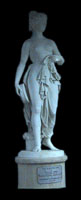
Dancing Girl by William Theed stolen from Tunbridge Wells, Kent UK.

Kent UK - Stolen from a museum and a park 50 miles from each other on 22 October 2006.

ITEM ONE: Stolen from Dunorlan Park, Tunbridge Wells. 'Dancing Girl', a Victorian marble statue of a scantily clad woman holding a tambourine by William Theed (see photo above).

ITEM TWO: Stolen from Powell-Cotton Museum, Birchington. Five 18th century cannon barrels, but not their carriages. Three were bronze, 5ft long, with markings and dolphin-shaped handles, French India Company 1732 from the battle of Quebec. Two smaller civilian ones were also stolen.

Any info to Kent Police on 01732 379217 or Crimestoppers 0800 555111. A £1,500 reward is being offered for the recovery of the statue and a conviction, and £10,000 for the cannon.

Wednesday, November 01, 2006

Dalston Theatre demo plea


Dalston Theatre [Photo Derelict London


Dalston, London UK - Campaigners fighting to save Dalston Theatre have asked Ruth Kelly minister for communities to stop the London Development Agency from demolishing and replacing it by high-rise housing. A previous injunction has lapsed and another is being sought. Dalston Theatre has been squatted since February. Formerly the North London Coliseum and Amphitheatre, the venue was built in 1886 as an open air circus. The Theatres Trust say that the entranceway used by performers and elephants is the oldest of its kind left and was used by Robert Fossett’s Circus. In 1898, the building was converted into a variety theatre and in the 1920's it became a cinema. In the 1960's it became a music venue at which Stevie Wonder, Bob Marley and Billy Ocean all played. It was boarded up by Hackney Council in 1999.

Monday, October 30, 2006

Street hawker themed restaurants

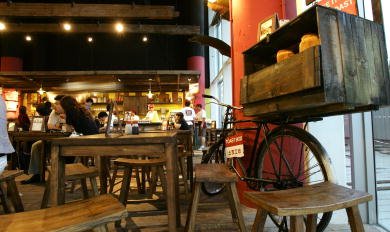
A SG$16,000 (£5,350) Qing dynasty 100 year old horse-drawn rickshaw in the half-acre Food Republic's latest cafe a VivoCity in Singapore [Photo Mohd Ishak


Singapore - IT could be that the ethnic eatery is about to take over from the Irish theme pub in Asia. And if so, you can bet it will be heading to America and Europe soon. Singapore's most expensive cafe, the 27,000 sq ft 900 seat Food Republic at VivoCity cost $6m (£2m) to fit out, and comes complete with 24 hawker stalls, five mini restaurants and a shop. It aims to recreate the street hawker scene in Asia from the 1900s to 1940s with bygones imported from China, Malaysia, Indonesia and Thailand. Reclaimed materials like floor tiles came from houses in China due to be demolished, as well as old wooden chairs and tables. The ersatz hawkers wear traditional Mandarin collar shirts, three-quarter pants and walk round in old-fashioned clogs.

Food Republic's Patsy Loo said that it took two years to plan and find materials. They found inspiration in Signapore's National Museum and Heritage Board. Next they went to Malaysia and China, and shipped back two containers of furniture and materials. Said Ms Loo, "We want to help locals and tourists understand what Asia was like in the pre-war period, when there were a lot of street hawkers. People were poor, but they had simple and good food. We want to recreate that flavour."

Though the food court in VivoCity was expensive to create, the food there is not. A plate of tahu goreng costs $3.80 (£1.20), while a bowl of bak chor mee from the famous Tai Hwa Pork Noodle stall is about $5 (£1.75)

Food Republic is a subsidiary of the Breadtalk Group, a bakery whose hallmark shops have see-thru plate glass kitchens (see photo below). Breadtalk Group


One of Breadtalk Group's hallmark 'see thru' plate glass high street bakeries.

Lion top lot at steady Gaze sale

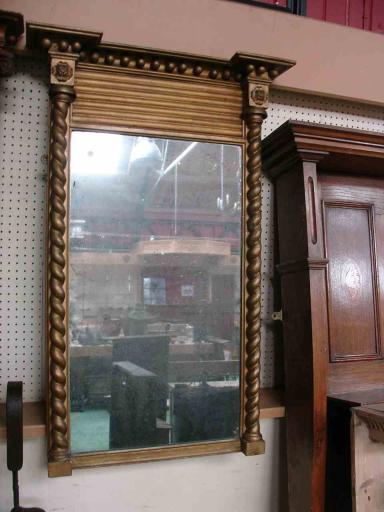
19thC gilt mirror with spiral column, sold £231 (est £100)

Pair of panelled pine doors from Redgrave Hall orangery c1760 by Henry Holland under Capability Brown for Rowland Holt, each 1.08m wide by 3.78m high, sold £220 (est £250)

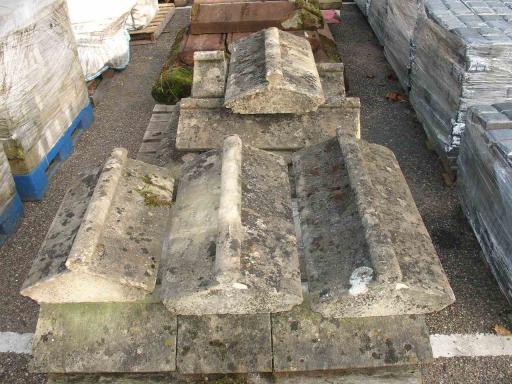
14ins roll ridge stone coping, sold £300 (est £300)

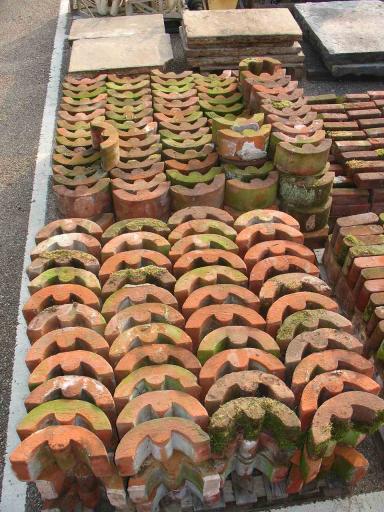
Old brick shapes from Brome Hall, Suffolk, sold £670 (est £200)

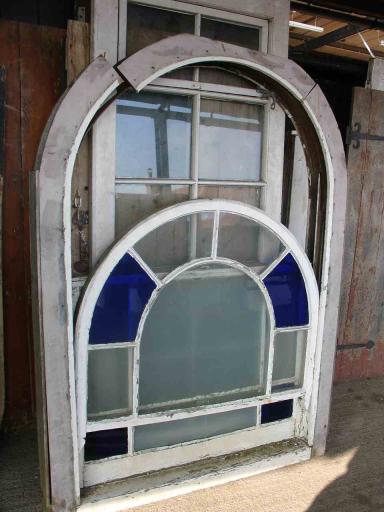
Arched top pine sash window with four blue glass panes
, sold £253 (est £150)


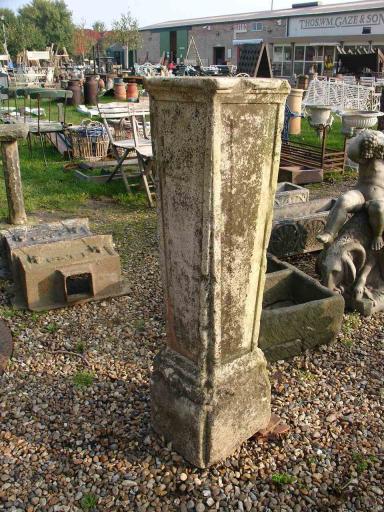
A Portland stone sundial base tapered panels on square base, the top 13ins square, sold £620 (est £300)

TOP LOT: a pair of compo lions couchant on plinths, sold £1,320 (est £1,200)

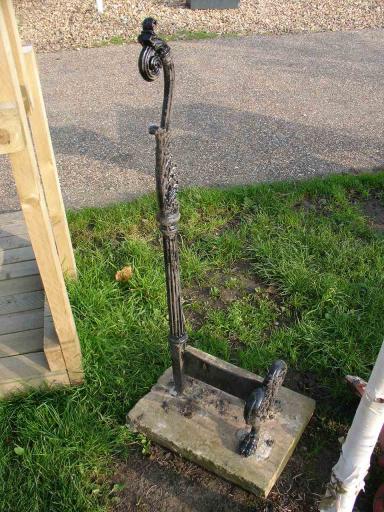
A cast iron boot scraper with decorative support set on a stone slab, sold £264 (est £150)

Six-sided steel tree seat, sold £440 (est £300)

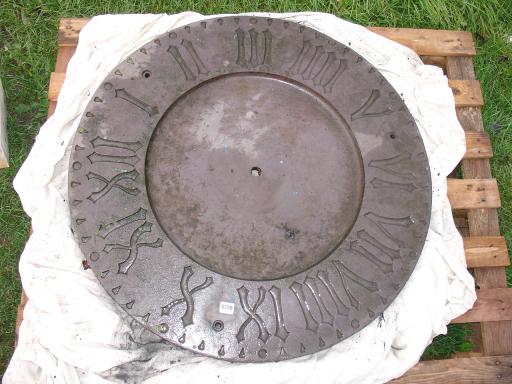
Late 19thC slate clock face 3ft dia 2ins thick, Roman numerals incised, minutes marked, sold £464 (est £400)

Diss, Norfolk UK - Site

Friday, October 20, 2006

Mammoth tusks - ethics, fakes and myths

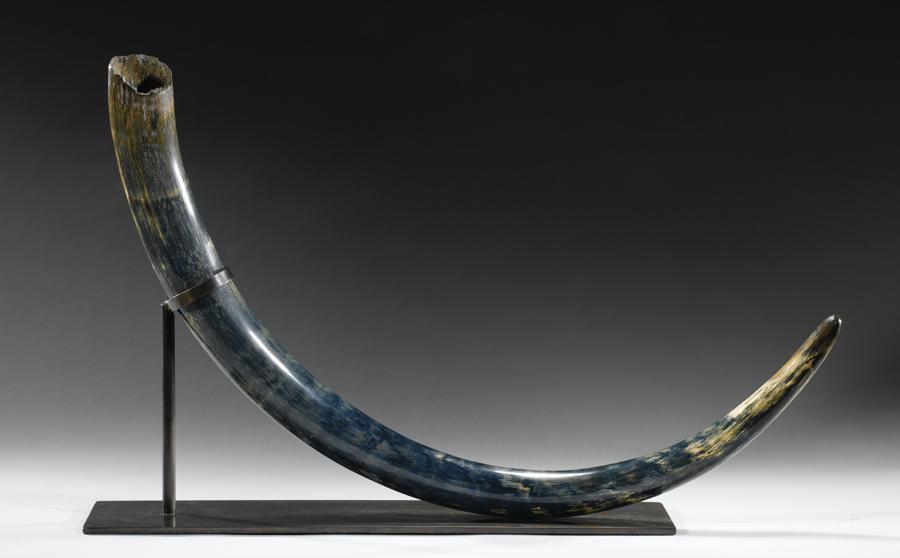
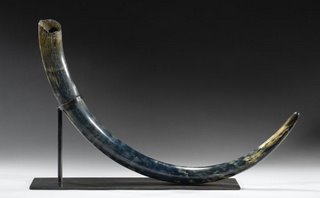
Blue-hued mammoth tusk from the Tamyr peninsular, Siberia, which sold at Sotheby's Billingshurst sale (below) on 26 Sep 06 for GBP£6,000 (est£2.5k), 102cm.; 40ins on outside curve.


WOOLLY mammoth tusks are often the top lot of the fossil section of Sotheby's sales of 'Garden, Architectural and Fossil Decoration'. Fossils have always had a following from collectors, but their increase in popularity may be a result of the art world's move into the natural, deathly, sensational and anatomical, by people like Damien Hirst. Movements in art influence exterior and interior design, and fossils are one of the nearest things you can get to tasteful and naturally decorative sculpture made into durable materials from the death of animals and plants. Death and anatomy are recurring themes of Britpop. Fossils are perhaps a more acceptable way to represent them. Fossils are attractive because they will fit with stark minimalist interiors as well as junk-filled maximalist ones, although I have never seen a millionaire's retreat with interiors tastefully decked out in ammonites, trilobites, knightia fish and the odd mammoth tusk (publishable photo's gratefully received).

Fossils are strictly-speaking mineralised organic matter, which means living things turned to rock. Although you can find fossilised mammoth tusks up to 1.6m years old, those sold at auction tend to be real 20,000 years old ivory that has been preserved by being buried, often in bogs or alluvium, where the lack of oxygen has prevented their natural decay. Mammoths became extinct 3,500 years ago due to global warming and hunting by paleolithic man.

The recent global warming in places like Siberia results in melting ice and tundra, and soil erosion which exposes buried mammoth skeletons. Greater mineral exploitation, small aircraft, quads and four by fours, general mobility and local awareness of value, means more and more fossils will find their way to the relatively rich western markets.

Practically anything removed and sold results in accusations of desicration and profiteering. The world of architectural and garden antiques is familiar with that sentiment by conservationists. Now archaeologists are at loggerheads with fossil-hunters. A long ethical argument is described in the story of Confuciusornis sanctus in China, where fossil hunting is banned. In most parts of the world, collecting fossils from private land with the owner's permission is perfectly legal.

Butterfields in San Francisco is an auction house well known for its regular architectural and decorative antiques sales, where fossil selling has generated more of a public debate between academics and fossil-hunters. In 2001 a Siberian woolly mammoth tusk sold for $32,000 at Butterfields.

US Geologists on a field trip to Wrangel Island in north-east Siberia came across quite a few mammoth tusks, and took this photo of a local who had picked this one up - no doubt to pass it into the global dealer network. [Photo: Lyn Gualtier


"Things are being lost to science because we don't have enough people out there looking. There are not enough degreed paleontologists or tax dollars . . . to look at nearly a half-billion acres of public lands, let alone private lands," said Marion Zenker, marketing coordinator for the Black Hills Institute in South Dakota, a leading commercial fossil excavator. Zenker, a plain-spoken former tractor-trailer driver and mother of eight, said academic hunters "act like the high priests of paleontology." Robert Bakker, the Harvard and Yale trained paleontologist who helped advance the idea that dinosaurs were warmblooded, has said many of his colleagues promote a class system. "We guys with PhDs think we have a God-given right to dictate where and how specimens are collected," something Bakker said is not in the public interest. Zenker adds that scientific credentials should not be the only entry into a fossil dig: "The people who are in this field are here because they love fossils." Zenker's Black Hills Institute found Sue, the world's most famous Tyrannosaurus rex. And the world's most costly. Sue sold at a Sotheby's auction in 1997 for $8.4 million - leading to fear that important dinosaur fossils would be priced out of the reach of museums. Sue's story ended happily; corporate benefactors sponsored her donation to Chicago's Field Museum of Natural History. There is a comprehensive set of Fossil Protection Links on a site compiled by W Douglas Boyce, a Canadian paeleontologist.

Ivory Jack's website describes how mammoth tusks are found. It also describes their colour. 'The beautiful hues of tan, brown and blue are a result of thousands of years of mineralization. Exact hues depend upon the mineral deposits in the immediate soil surrounding the fallen mammoth.' There are more hued tusks, and also a complete skeleton, for sale at Arizona Skies.

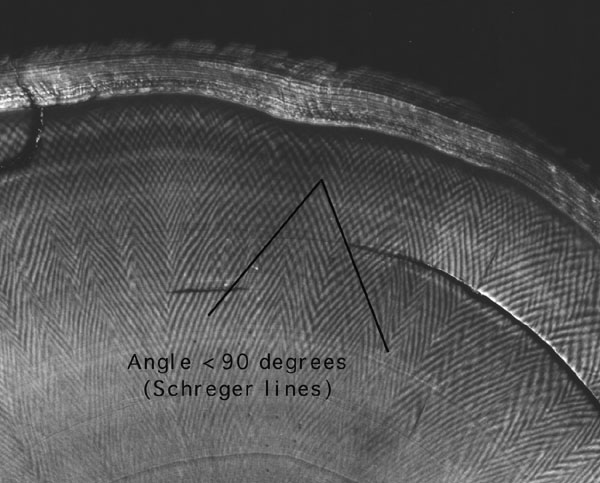
Woolly mammoth tusks have another ethical dimension: they are real ivory, and new ivory trading is protected under CITES regulation. However the sale of antique and prehistoric ivory is unregulated. How do you tell elephant from mammoth ivory? A section through both elephant ivory and mammoth ivory show natural cross-hatching. The angle between the cross-hatches can be an absolute test, outside the range 90 degrees - 115 degrees. Between these two figures a precise indentification is impossible. Clearly with single tusks this test will not work, unless a section has been cut and polished.

Whole mammoth tusks tend have flattened ends, roughly the last third towards the points, and have are often marked and worn on the undersides where it is believed they were used for foraging. They frequently wrapped inwards towards each other. Male tusks are thicker, more three-dimensionally curved and longer than female tusks. The longest mammoth tusks discovered are 16ft long.
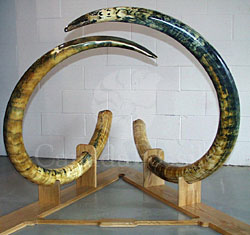
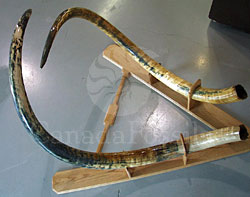
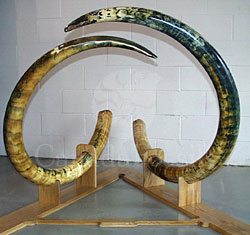
A matched pair of mammoth tusks, with inward interlinked curvature described above. They are not always curved like this. [Photos: Canada Fossils


Ho do you tell real ivory from bone or resin replica? Much of the real ivory antique netsuke replica is carved in workshops in Hong Kong. The Asian Arts website describes, not only the hot pin test to tell the difference between ivoyr and resin, but also whether it is real ivory (hardenend dentine) or plain bone. It also gives pointers as to which animal the ivory may come from. The test is to take a pin or large needle, or large straightened out safety pin, and heat the tip red hot, then stick it into the item. If ivory, the pin will not penetrate but will only leave a tiny mark. If resin, it will go straight into the item and leave a raised area around the hole. If ivory, the smoke will smell of drilled tooth that you get at the dentist's. If it smells like burning plastic, it is resin. Bone is resistant to heat, but not as much as ivory. The smell is less (or hardly at all) and is different than that of burning tooth. Bone is free of grain and will always have little "pock marks" (sometimes brown) where the marrow was, visible with a magnifying glass. If it has any grain, especially crosshatching, you have the real ivory. Planet Ark the eco-website says, 'Mammoth ivory, now starting to come onto the market in large quantities as global warming thaws the permafrost in Canada and Russia and exposes the corpses of the long-dead woolly giants, is virtually indistinguishable from elephant ivory. However, unlike elephant ivory, mammoth tusks smell, and are harder to work.'
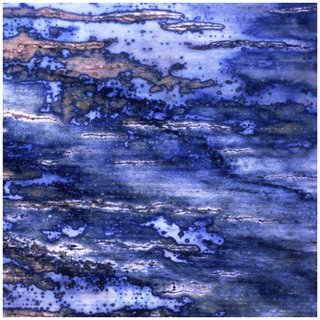
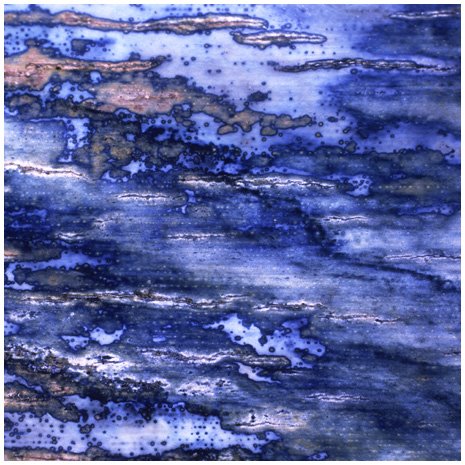
Another way to make check that the blue stained on mammoth tusk is real and not fake is to check for blue 'vivianite' using ultra-violet light. The photo shows vivianite on a mammoth tusk found at the Pamir Peninsula, Siberia. The tusks of mammoths are made of enamel externally and dentin internally. The dentin is calcareous and similar to bone but softer and chemically more active. Vivianite, a hydrated ferrous phosphate Fe3(PO4)2·8(H2O), and dentin, can form thin coatings on the damaged surfaces of fossilizing tusks. Vivianite goes darker on exposure to light. [Photo: Copyright © 2003 Giraud Foster & Norman Barker
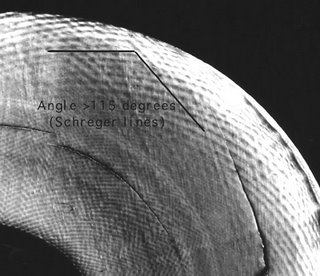
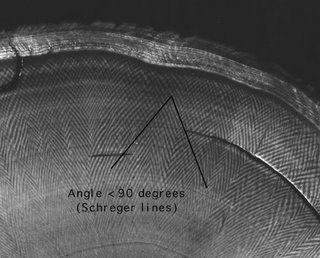


If you have a polished section through the tusk it is possible to tell elephant from mammoth using the Schreger lines, or cross-hatching. If the angle between them is greater than 115 degrees it is elephant. If the angle is less than 90 degrees it is mammoth. [Photos: U.S. Fish & Wildlife Services forensics laboratory


Another website with close-ups of Mammoth Tusks explains the difference between Siberian, American (bigger) and European mammoths (smaller with curvier tusks, many of which are still being trawled up in the north sea by Dutch fishermen. 'This fossil specimen is not subject to any bans. It can be legally owned and shipped to anyone anywhere. They are one of the most popular large display fossils of any collection. The woolly mammoth is the mascot animal of the Earth's final Ice Age.'

Enchantment with fossils and buried tusks goes back to Roman times. It is fair to say that the Romans were obsessed with fossils. Much of the mythology, especially legends of giants, has been attributed to the discovery of large buried fossils. The legend of the Caledonian Boar is believed to have come from fossil remains, possibly even woolly mammoth tusks. The web page Accounts of Greek and Roman Paleontology says, 'In 31 BC, the future emperor Augustus plundered the great tusks of the mythical Calydonian Boar from a temple in Tegea, Greece, and installed them in Rome. These were most likely prehistoric elephant tusks dug up in Pleistocene fossil beds near Tegea. Some 400 years later the historian Procopius saw a great pair of tusks labeled "from the Calydonian Boar" at Beneventum, Italy. He described them as "well worth seeing, measuring three hand-spans around and curved in a crescent shape," which suggests that the "Calydonian tusks" at Beneventum were a pair of woolly mammoth tusks, common fossil remains in Italy.'

Site

Monday, October 02, 2006


Ferndown, Dorset UK - Cheffins of Cambridge will hold an auction sale on at Ferndown in Dorset on Saturday 7th October 2006 of historic UK, USA and Australian tractors and vehicles (estimated up to £40,000), stationery engines, and the contents of a country museum. See Cheffins Stapehill Catalogue here.

Friday, September 15, 2006

Gaze bygones sale tomorrow


Diss, Norfolk UK - T W GAZE is holding a bygones sale on Saturday 16 September featuring 1000 lots of rural and domestic paraphernalia, including the collection of a retiring gamekeeper, and the contents of a local museum. "My personal favourite in this sale is a Victorian cucumber slicer estimated at around £50," Carl Willows, Gaze's expert in charge, told SalvoNEWS, clearly Freudian as Mr Willows has too many children. Also of possible interest is an American apple peeler, the return of the turret clock - accompanied by more clocks this time. I like the look of the reaper's whetstone in a leather case. It's about time everyone got out into the fields at this time of year and did some manual harvesting. Happily I am not the only believer, as there is an obscure Czech group called Scythe Renaissance who do just that. There are some people who may say that I should join them on a permanent basis!

For more auctions and fairs go to SalvoWEB Auctions & Fairs Calendar


Featured

Drummond Shaw interviewed in 2008

Hindhead, Surrey UK - DRUMMOND Shaw of Drummonds Architectural is interviewed by Thornton Kay of Salvo in the back yard of his Hindhead, Su...