2,300 square metres of ground were excavated before a new highway was to be built. The five bricks were discovered in an ash-pit, and are believed to be 5,000 - 7,000 years old. The oldest bricks are from the Middle East and date back 10,000 years.
Showing posts with label reclaimed bricks. Show all posts
Showing posts with label reclaimed bricks. Show all posts
Wednesday, April 21, 2010
5 important ancient bricks discovered in China
Shaanxi Province, China - Bricks discovered by an archeologist in China have proved that the Chinese were making bricks more between 1,000 and 2,000 years earlier than previously thought.
Monday, April 12, 2010
How not to get reclaimed bricks off a 14 storey building!
A ditty sung by the duo The Corries one of which, Robin Williamson, composed the Scots national anthem - The Flower of Scotland. This song is known as The Sick Note and was written by Irish singer songwriter Pat Cooksey in Coventry in 1969 based on an earlier music hall yarn of the 1920s.
Tuesday, March 16, 2010
Handmade brick slavery

Above: Many children and handicapped persons are kidnapped and sold to underground brick factories in Shanxi and Henan Provinces, like this one in Mou County, Henan. The children are forced to work 14 to 16 hours a day.(Epoch Times Archive)
London UK - ANTI-SLAVERY International has just brought out a poster based on the 2009 USA Department of Labor 'Goods produced by Child Labor or Forced Labor' showing bricks made by forced labour in Burma, China, India, Pakistan, North Korea and Nepal. According to the USA Dept of Labor slave bricks are also known to be produced in Afghanistan, Argentina, Bangladesh, Brazil, Cambodia, Colombia, Ecuador, Peru and Uganda.
In the western world, in Europe, including the UK and Ireland, and in North America, some builders merchants, specialist brick suppliers and some salvage yards now sell new handmade bricks which look like old handmades, imported from developing countries.
Forced labour is defined as 'all work or service which is exacted from any person under the menace of any penalty and for which the worker does not offer himself or herself voluntarily'. Brickmaking is one of the four major industries deploying forced labour.
Consumers are warned to be vigilant about where and what they buy. Ask for provenance details before agreeing a purchase.
Salvo suggests that western consumers should consider buying reclaimed local bricks of known provenance from their local salvage yard rather than new bricks of uncertain manufacture from a developing country. Reclaimed bricks are more eco-friendly than new bricks because every reused old brick saves around 6MJ of energy which is the equivalent of half a kilo of carbon dioxide per brick, or a tonne of CO2 for every 2,000 bricks.
Products of Slavery poster
'THE USA DEPARTMENT OF LABOR’S LIST OF GOODS PRODUCED BY CHILD LABOR OR FORCED LABOR' report
More than 460 rescued from brick kiln slavery in China
Reclaimed bricks on SalvoWEB
Tuesday, October 20, 2009
Hoffman Kilns

KRIS DE DECKER writes about the development of the technology of continuous brick firing in the late 1800s, in the latest online article in Low Tech Magazine. For salvage enthusiasts this mag is great antidote with articles like 'Cargo ships, then and now' and '12 small wind turbines put to the test' or 'How to make everything yourself: online low tech resources'.
Low Tech Magazine: Hoffmann Kilns by Kris De Decker
Tuesday, April 07, 2009
Reclaimed brick tricycle cargo carrier
 Above: This looks like around 150 bricks, or half a ton, or 500kg of reclaimed bricks, spotted in the streets of Xi'an in China. It could be electric assisted but we could not tell from the angle of the photo. Anyone know of manufacturers of heavy duty load carrying trikes and their maximum load?
Photo Bill and Carla's Chinese Adventure
Tuesday, December 09, 2008
BigREc Survey shows predicted decline in reuse between 1998 and 2007

London UK - THE report on the BigREc 2 Survey was launched in St Pancras, London last Thursday 4th December 2008 with presentations and talks by Gilli Hobbs and Katherine Adams of BRE, Thornton Kay of Salvo and Steve Tomlin of Masco.
The report had been commissioned by BRE in 2006 and was carried out in 2006 – 2007. The results showed that, overall, the reclaimed part of the reclamation trade had declined since 1998, although some sectors of the trade, reclaimed bricks and architectural woodwork for example, had increased.
Anecdotal evidence that the government push for recycling, spearheaded by WRAP, had diverted materials away from reuse and towards crushing and chipping, seemed to be confirmed by the survey, with total volumes down from 2.96m tonnes in 1998 to 2.23m in 2007. Employment was also down from 39,000 in 1998 to 25,800 in 2007.
The BigREc survey was in two parts: Yellow Postcards and the main BigREc survey questionnaires comprising 19 material sectors ranging from salvaged concrete to antique bathrooms
2,043 Yellow Postcards were sent out of which 1,900 were valid, and 180 were returned (compared to 1200 sent out of which 288 were returned in 1998). These gave an indication of the total size of the market, the type of business and sales turnover of each respondent.
323 BigREc main survey questionnaires were sent out of which 36 were completed (88 completed in 1998) comprising of a 28 page booklet with 235 questions in total. The survey gave detailed info on volumes, stocks, suppliers, customers, distances goods travel, employment and standards of supply.
The Yellow Postcards and BigREc Survey were two separate surveys which corroborated each other to an extent.
It is a long job answering 235 questions and after the failure of the BigREc survey of 1998 to make any impact on policy (in fact government policy moved against reuse after the survey was published in 2000) unsurprisingly there was less enthusiasm for completing the survey this time.
The Yellow Postcards went into a draw for a free Salvo mag subscription worth £50 (won by Anglia Building Supplies in Essex) and the BigREc main survey went into a draw for a free stand at Salvo Fair worth up to £750 (won by David Nightingale of 3A Roofing in Suffolk).
Nine businesses completed both surveys in 1998 and 2007 – it would have been eleven but two have since gone completely out of salvage and into new manufacture. Accuracy is an issue with this survey, comparative shifts are more reliable than absolute figures.
The Yellow Postcard and BigREc 2 survey was undertaken by Thornton Kay of Salvo Llp.
Construction Resources Waste Platform BigREc Survey Report 2008
Wednesday, August 27, 2008
Vintage Brick Salvage of North America
Vintage Brick Salvage of Rockford North America, share some of the frequently asked questions they get and the answers they give to them. . .
Q: What is the story with used brick, and to what do you account to its growth in popularity?
A: There are several reasons for the increased popularity of reclaimed brick. Recycled brick has benefited from a move towards green building materials. Used brick certainly holds historical value as well. But in my opinion the number reason for the popularity of reclaimed brick is simply that the beauty of the natural clay these bricks are made from and the aging of these brick over time. An authentic, time worn, reclaimed brick is impossible to duplicate. Using Antique brick in a new project or remodeling job will create a space that conjures up the feeling of a century old structure even in a brand new installation.
Q: How is used brick cleaned and stacked?
A: The cleaning and stacking of bricks is done the old fashioned way, with much effort and sweat. The bricks are cleaned by striking them with a hammer, and stacked on pallets at the job site. The bricks are then covered in cardboard and then banded with steel banding, or wrapped in heavy duty stretch wrap.
Q: How many common building brick are stacked on a pallet?
A: When stacking standard size used common brick, at about 4 lbs. per brick, there are typically 534 bricks on a pallet, consisting of 12 total alternating layers of 11X 4 (44), and 9 X 5 (45). If the brick weigh more, less are stacked in each pallet.
Q: What was that about standard size bricks, I am not a mason, speak English
A: O.K., sorry, I'll slow down. Most of the building brick made in the Midwest U.S. was made as standard size. Once in a while we come across some romans, or normans, but typically only in small quantities.
Historic Brick Sizes of North America
Length Width Height
Standard 8" 3 5/8" 2.25"
Roman 11 1/2" 3 1/2" 1 5/8"
Norman 11 1/2" 3 1/2" 2 3/4"
Q: What is the story on your antique brick tile?
A: We start with an actual reclaimed brick, Chicago commons are popular, but we also cut pavers and other brick. Then we slice it in our own facility in an automated process using production machinery and diamond blades. It is then packed in cardboard tile boxes, palletized and shipped. When installed well, I dare you to tell the difference between a thin brick and full brick installation. We slice antique brick tile for walls and floors. We also make some thicker cuts that make a great pavers.
Q: What size is normal for Street Pavers?
A: Most Midwest made clay street pavers are between 8 ½”-9” long and and between 3 5/8”-4” wide and deep.
Can you use reclaimed brick outdoors?
A: Reclaimed street pavers can be installed indoors or out. They will outlast all of us. Common brick should not be used for paving in areas that have any freeze/thaw. I have always told people that if you can grow oranges, you have the correct climate for paving with common brick. Otherwise the 8% plus absorption rating that is usually found in a common reclaimed brick combined with any freeze will cause the brick to disintegrate as it expands from freezing. Vertical installations are usually O.K. in any climate, but I would recommend using a masonry sealer to help keep out the enemy of the natural clay brick; moisture.
Vintage Brick Salvage
Video at Vintage Brick Salvage
Q: What is the story with used brick, and to what do you account to its growth in popularity?
A: There are several reasons for the increased popularity of reclaimed brick. Recycled brick has benefited from a move towards green building materials. Used brick certainly holds historical value as well. But in my opinion the number reason for the popularity of reclaimed brick is simply that the beauty of the natural clay these bricks are made from and the aging of these brick over time. An authentic, time worn, reclaimed brick is impossible to duplicate. Using Antique brick in a new project or remodeling job will create a space that conjures up the feeling of a century old structure even in a brand new installation.
Q: How is used brick cleaned and stacked?
A: The cleaning and stacking of bricks is done the old fashioned way, with much effort and sweat. The bricks are cleaned by striking them with a hammer, and stacked on pallets at the job site. The bricks are then covered in cardboard and then banded with steel banding, or wrapped in heavy duty stretch wrap.
Q: How many common building brick are stacked on a pallet?
A: When stacking standard size used common brick, at about 4 lbs. per brick, there are typically 534 bricks on a pallet, consisting of 12 total alternating layers of 11X 4 (44), and 9 X 5 (45). If the brick weigh more, less are stacked in each pallet.
Q: What was that about standard size bricks, I am not a mason, speak English
A: O.K., sorry, I'll slow down. Most of the building brick made in the Midwest U.S. was made as standard size. Once in a while we come across some romans, or normans, but typically only in small quantities.
Historic Brick Sizes of North America
Length Width Height
Standard 8" 3 5/8" 2.25"
Roman 11 1/2" 3 1/2" 1 5/8"
Norman 11 1/2" 3 1/2" 2 3/4"
Q: What is the story on your antique brick tile?
A: We start with an actual reclaimed brick, Chicago commons are popular, but we also cut pavers and other brick. Then we slice it in our own facility in an automated process using production machinery and diamond blades. It is then packed in cardboard tile boxes, palletized and shipped. When installed well, I dare you to tell the difference between a thin brick and full brick installation. We slice antique brick tile for walls and floors. We also make some thicker cuts that make a great pavers.
Q: What size is normal for Street Pavers?
A: Most Midwest made clay street pavers are between 8 ½”-9” long and and between 3 5/8”-4” wide and deep.
Can you use reclaimed brick outdoors?
A: Reclaimed street pavers can be installed indoors or out. They will outlast all of us. Common brick should not be used for paving in areas that have any freeze/thaw. I have always told people that if you can grow oranges, you have the correct climate for paving with common brick. Otherwise the 8% plus absorption rating that is usually found in a common reclaimed brick combined with any freeze will cause the brick to disintegrate as it expands from freezing. Vertical installations are usually O.K. in any climate, but I would recommend using a masonry sealer to help keep out the enemy of the natural clay brick; moisture.
Vintage Brick Salvage
Video at Vintage Brick Salvage
Thursday, March 22, 2007
Homebuilding & Renovating Show NEC
NEC Birmingham UK 22-25 March 2007 - THIS year's Homebuilding & Renovation Show at the NEC in Birmingham, usually visited by 50,000 ardent DIY builders, reflects the move away from reclaimed, the hijacking of the word for marketing, and more imports of new materials from, especially from China and India.
Baggeridge Brick had a set of display panels of its new bricks, one of which was called 'Reclaimed Shire Sovereign Stock'. "Are these reclaimed bricks," I asked. "Oh no, they are lookalike reclaimed bricks," was the reply. "Then shouldn't they be called 'Reclaimed lookalike Shire Sovereign Stock'," I said. "Everyone knows they are not reclaimed," was the reply. Baggeridge, fourth largest UK brick company, and the largest still in UK ownership, had difficult trading in the past few years. Its brick stocks are up, profits from bricks are down, but profits from landfill are up. A German company now wants to buy it.
Penny Bricks, who still offer reclaimed bricks on their trade literature and business cards, now sell a range of new handmade lookalike bricks. "Do you still sell reclaimed bricks," I asked. "Not really. It's too difficult to get hold of them. These days if we are offered a batch of 2,000 to buy, we just turn them down." Penny Bricks started out as a salvage business but now sells mainly new oak beams, new wood flooring, new bricks, new doors and new 'railway sleepers'. They did at least have a few heavily smoothed and polished reclaimed beam pieces on show.
Midlands Slate & Tile is another formerly salvage company which has moved heavily into new materials, especially new clay tiles (from Turkey?) and at the NEC was showing a new range of natural limestone roof tiles. Rick Doody was in selling mode so I did not get a chance for a chat.
Indigenous is a new imported stone flooring and tile business in Oxfordshire. It had a panel of small stone tiles called 'Reclaimed Jerusalem flagstones'. "Are these tumbled new stone," I asked. "Oh no. These are antique stones dating back to biblical times . . . they could have been walked on by someone biblical," came the reply.
Machell is another ex-salvage business who were selling all new products at the show.
Period Living magazine had an enclave within the show, featuring period craftspeople and products, among which was Peter Weldon offering replica Vietnamese gates with his new built-in underground automatic electric gate closers. They also included a last minute stand by Antique Baths of Ivybridge, with Nick Cowen displaying old baths re-enamelled using their in-house epoxy process. Chris Baylis was there with Castrads, replica Chinese cast iron decorative and column radiators, valves and towel rails. Chris started the salvage business RBS in the early 1990's which he then sold and dabbled in Carribean real estate for a while gave that up and started Castrads last year. "Business has been going very well," he said. Emma Farrington of Period Living has arranged for the magazine to sponsor the talks at this year's Salvo Fair.
Oak frame stands included T J Crump Oakwrights and Border Oak both of whom had erected two storey frames made from French, German and Polish oak, and Carpenter Oak with single storey stand.
Ben Latham of Red Rhino Crushers was showing a mini concrete, stone and brick crusher capable of crushing 2,000 bricks an hour.
Debbie Buggins of the new Self-Build and Renovation Centre in Swindon explained the virtues of having a £2,000 permanent display of reclaimed products at their new centre.
Homebuilding & Renovating Show
Baggeridge Brick had a set of display panels of its new bricks, one of which was called 'Reclaimed Shire Sovereign Stock'. "Are these reclaimed bricks," I asked. "Oh no, they are lookalike reclaimed bricks," was the reply. "Then shouldn't they be called 'Reclaimed lookalike Shire Sovereign Stock'," I said. "Everyone knows they are not reclaimed," was the reply. Baggeridge, fourth largest UK brick company, and the largest still in UK ownership, had difficult trading in the past few years. Its brick stocks are up, profits from bricks are down, but profits from landfill are up. A German company now wants to buy it.
Penny Bricks, who still offer reclaimed bricks on their trade literature and business cards, now sell a range of new handmade lookalike bricks. "Do you still sell reclaimed bricks," I asked. "Not really. It's too difficult to get hold of them. These days if we are offered a batch of 2,000 to buy, we just turn them down." Penny Bricks started out as a salvage business but now sells mainly new oak beams, new wood flooring, new bricks, new doors and new 'railway sleepers'. They did at least have a few heavily smoothed and polished reclaimed beam pieces on show.
Midlands Slate & Tile is another formerly salvage company which has moved heavily into new materials, especially new clay tiles (from Turkey?) and at the NEC was showing a new range of natural limestone roof tiles. Rick Doody was in selling mode so I did not get a chance for a chat.
Indigenous is a new imported stone flooring and tile business in Oxfordshire. It had a panel of small stone tiles called 'Reclaimed Jerusalem flagstones'. "Are these tumbled new stone," I asked. "Oh no. These are antique stones dating back to biblical times . . . they could have been walked on by someone biblical," came the reply.
Machell is another ex-salvage business who were selling all new products at the show.
Period Living magazine had an enclave within the show, featuring period craftspeople and products, among which was Peter Weldon offering replica Vietnamese gates with his new built-in underground automatic electric gate closers. They also included a last minute stand by Antique Baths of Ivybridge, with Nick Cowen displaying old baths re-enamelled using their in-house epoxy process. Chris Baylis was there with Castrads, replica Chinese cast iron decorative and column radiators, valves and towel rails. Chris started the salvage business RBS in the early 1990's which he then sold and dabbled in Carribean real estate for a while gave that up and started Castrads last year. "Business has been going very well," he said. Emma Farrington of Period Living has arranged for the magazine to sponsor the talks at this year's Salvo Fair.
Oak frame stands included T J Crump Oakwrights and Border Oak both of whom had erected two storey frames made from French, German and Polish oak, and Carpenter Oak with single storey stand.
Ben Latham of Red Rhino Crushers was showing a mini concrete, stone and brick crusher capable of crushing 2,000 bricks an hour.
Debbie Buggins of the new Self-Build and Renovation Centre in Swindon explained the virtues of having a £2,000 permanent display of reclaimed products at their new centre.
Homebuilding & Renovating Show

Wednesday, January 17, 2007
Reclaimed bricks help Cavern club celebration
Footage from 1962 of the Beatles at the old Cavern club from which the bricks were saved after its demolition in 1973
Liverpool, Merseyside UK - THE Cavern Club in Mathew Street is celebrating its 50th birthday with a thirteen hour party. The Beatles played hundreds of gigs at the Cavern Club between 1961 and 1963. The original club was located in the cellars of a Victorian warehouse and was demolished in 1973 to allow a shaft to be built for the Mersey underground railway Link improvement. In 1983 it was decided that the Cavern should be rebuilt, following the death of John Lennon, a few yards away from its original location, reusing some of the bricks reclaimed from the original demolition. Over 15,000 bricks from the old Cavern were reused in the reconstruction.
Some bricks were taken by locals and 5,000 were sold by site owners the Royal Life company in 1983 for £7 each. A plaque certifying their authenticity was glued to each brick with the proceeds being donated to a local charity. All of the bricks were sold and in the late 1980s one was said to have been resold for over £500 by Sotheby's. [The true story of the Cavern]
 Authenticated brick from the original Cavern club. One was sold at Sotheby's for £500
Liverpool, Merseyside UK - THE Cavern Club in Mathew Street is celebrating its 50th birthday with a thirteen hour party. The Beatles played hundreds of gigs at the Cavern Club between 1961 and 1963. The original club was located in the cellars of a Victorian warehouse and was demolished in 1973 to allow a shaft to be built for the Mersey underground railway Link improvement. In 1983 it was decided that the Cavern should be rebuilt, following the death of John Lennon, a few yards away from its original location, reusing some of the bricks reclaimed from the original demolition. Over 15,000 bricks from the old Cavern were reused in the reconstruction.
Some bricks were taken by locals and 5,000 were sold by site owners the Royal Life company in 1983 for £7 each. A plaque certifying their authenticity was glued to each brick with the proceeds being donated to a local charity. All of the bricks were sold and in the late 1980s one was said to have been resold for over £500 by Sotheby's. [The true story of the Cavern]
 Authenticated brick from the original Cavern club. One was sold at Sotheby's for £500
Saturday, November 25, 2006
Salvo Reclamation Protocol 1995
London UK - This was written by me and put on SalvoWEB in 1995 but was deleted a few years ago, so I am putting it on my blog in its original form. First called the 'Salvo Recycling Protocol' it was quickly renamed the 'Salvo Reclamation Protocol' when the term 'recycling' started to be used for destruction rather than reuse.
---------------------------
©SALVO 1995. REFERENCE & INFORMATION. Students & Journalists are free to use the contents PROVIDED we are sent a copy and Salvo is credited in the publication.
The Salvo Recycling Protocol
We are often asked some pretty basic questions about reclamation and recycling by people in all walks of life. Students, Researchers, Television and Press Journalists, Home Interest Magazines, Conservationists, Environmentalists, Local Government Officers, MPs, and even the DoE and European Commission. So it seemed like a good idea to have a look at the theory, and how it is practised.
The answer to the simple question, "Why should we reclaim old building materials?" is not so simple. It pre-supposes that we don't, or that we aren't as much as we should. Third world countries are still efficient recyclers, as Britain was up to 1950. Since then the UK has trashed ever-increasing amounts of reusable construction materials. The building boom of the 1950s, 1960s and 1970s came after a Government White Paper - the 1948 Parker Morris report - recommended minimum standards to which every human in post-war Britain was entitled. These referred to daylight and ventilation, an indoor toilet, a kitchen with a ventilated pantry, and freedom from damp buildings. Buildings which failed to provide these standards were declared slums. The report stated that, although one solution would be wholesale slum clearance, this would be socially destructive. The Macmillan government simply ignored the social destruction and proceeded to 'clear slums' at a cost to the social fabric of Britain which is still reverberating through the poor areas of towns and inner cities, and the high-rise housing estates that were constructed to replace 'slums' many of which are now being demolished.
Why reclaim demolished building materials? Answer:
1. It can save energy
2. It can save mineral resources
3. It can save forests
4. It can save architectural history
5. It can provide employment
6. It can reduce construction costs
What is the Salvo Recycling Protocol?
We have adapted the sensible provisos of the Rio Accord under Agenda 21 as follows, in order of merit:
1. Reuse without demolition.
The greenest and most energy efficient solution is to reuse a whole building with the minimum of alteration. It may be justifiable to uprate the insulation standard, but only if the energy saved during the remainder of the building's life is greater than the energy cost of the insulation uprating.
2. Reclamation of components.
The term 'Reclamation' was first used in this context by T Kay of Salvo in 1977. The term 'Architectural Reclamation' was first used by T Kay in 1991.
Reclamation should save as large a set of chunks as possible. The best method is to relocate an entire building, locally or further afield if necessary. If the building has a historical value, it would be better to relocate it abroad, intact, than to dismantle it and sell off bits to many buyers locally. If relocation is not an option then whole components should, firstly, be reused in the new building to be erected on the site, or secondly, sold to buyers in the local area, and thirdly, sold elsewhere. Where possible large items like windows should be kept in sets with their masonry surrounds. If a market does not exist for such large items then they should be broken down further and materials sold off individually. Architectural reclamation dealers exist who sell everything from entire dismantled buildings to individual bricks and floorboards.
3. Recycle and re-manufacture.
Components made from metal and plastic can be recycled by returning them to their constituent parts and reusing the resource to manufacture a new product. This has traditionally been done with scrap metals and, more recently, items like plastic motorway markers are being made from scrap plastic from buildings. The crushing of concrete for reuse as aggregate is acceptable but the crushing of old worked stone, or reclaimable bricks, to make recycled hardcore is not since the energy and resource losses are unacceptably high. It is easier to recycle components using highly capital intensive methods than to reuse and reclaim which involves human labour. The easiest route is usually the least environmentally-friendly.
4. Beneficially destruction with energy recovery.
The term 'Beneficial Destruction' was invented by T Kay of Salvo in 1992, although it has not been universally adopted.
If none of the above options are possible then carbon-based products can be burned in waste-to-energy plants creating useful heat for district heating or electricity generation. Wood can be put into engineered sealed landfill sites where methane is tapped for reuse, but not into open landfill since the methane generated during its decomposition is a greenhouse gas. A problem with 'beneficial destruction' is that once the capital is employed in building an expensive plant, the fuel must be found, and experience is now showing that such plants are seeking materials, that could be better reclaimed, for destruction in order to keep the plants operating. This does not bode well. Denmark is currently seeking reclaimable timber from Germany because it has run out of domestically available demolished material.
The recycling protocol above was effectively agreed to by the UK government, the EC, and in Agenda 21 - the 'Sustainability' clause - at the 1992 Rio Earth Summit. It has been signed to by 170 countries around the world.
Salvo recommend that all building or landscaping projects should include a minimum of 5 per cent to 10 per cent reclaimed materials. Currently the amount is less than 1 per cent. If you buy a new BMW 70 pert cent is recycled. If you buy a new building less than 1 per cent is reclaimed.
How much is tipped in the UK?
1994 DoE Guesstimate
'Managing Demolition and Construction Wastes' HMSO 1994. Consultant: Howard Humphries based on Ove Arup 1991.
TOTAL : 42m tonnes (in licensed landfill)
1991 DoE Guesstimate
'Occurence and Utilisation of Mineral and Construction Wastes' HMSO 1991. Consultant: Ove Arup. Based on 28 hrs research.
TOTAL : 70m tonnes (including fly-tipping)
1993 Salvo Guesstimate
Based on 20 years experience of the trade, hundreds of hours research in 1993, and verbally agreed to by a past president of the European Demolition Association & the UK National Federation of Demolition Contractors.
TOTAL : 100m tonnes (including all minor demolition, stripping out etc.) The comparable figure for Germany was 140m tonnes in 1993.
Table 1 - Breakdown of demolition and construction wastes in the UK based on ANNUAL DEMOLITION ARISINGS of 100 million tonnes = DAILY DEMOLITION ARISINGS of 418,000 tonnes.
Apologies if the old-style html table code does not render very prettily in modern blog css, but it was how the original looked in 1995
What this means is a massive loss of resources, energy and employment. UK Government policy is woefully adrift of anything meaningful in this area, possibly through ignorance of and bad advice from so-called professionals of the real issues.
BRICKS - Energy Values
It takes 4kwH of energy to make a Handmade or Wirecut Brick and 1.6kwH to make a machine-made Fletton (ignoring embodied energy within the clay).
Each year 3.5 billion new bricks are manufactured in Britain É. and 2.5 billion reclaimable bricks are landfilled.
Around 40m bricks are reclaimed for reuse as bricks. The energy cost of reclaiming them is about 9 wH of human work per reclaimed brick (= 0.009 kwH which represents a total of 135 full-time jobs cleaning bricks each year, and potentially 6,750 if all landfilled bricks were reclaimed.)
Around 100m bricks are crushed each year. The energy cost of crushing is 2 wH of fuel per crushed brick plus the loss of the embodied energy of up to 4 kwH per brick = 4.002 kwH. (This represents about 12 full time jobs, assuming 1 person attending the crusher, and 625 jobs if all landfilled bricks were recycled.)
Reclaiming old bricks is 400 times more energy efficient, and creates 11 times the employment, than Recycling them.
It takes about 1.5 kwH per mile per tonne to move goods by road. A reclaimed Fletton can be moved 320 mls and a Wirecut 800 mls before the energy cost of a new brick or a recycled brick is reached. But new bricks are always moved around 50 - 100 mls, so 400mls and 900 mls may be more realistic figures. The best reclaimed brick is one reclaimed and then reused on the site from which it was demolished.
RECYCLED v RECLAIMED BRICKS - PRICES
A landfilled brick costs between 1 - 2 pounds per tonne to dispose of, or about 0.3p - 0.6p per brick. A few sites allow free tipping of unmixed 'clean' hardcore. Around London some sites will even pay for hardcore in winter.
A crushed brick will sell as secondary aggregate for around 3.50 - 6.50 pounds per tonne or roughly 1p - 2p per brick.
Reclaimed Machine Made Flettons sell for 15p - 20p. Very few are sold, probably less than a million.
Reclaimed Wirecut Bricks sell for between 20p - 35p. Thinner bricks are more expensive.
Reclaimed Handmade Bricks sell for between 30p - 50p.Thinner bricks are in short supply.
On one site alone in Bristol in 1994 about 7 million 1906 Cattybrook Three Inch Wirecut Bricks were disposed of as landfill for lack of a buying market. Multiply this by 350 and you get 2.5 billion trashed bricks in the UK.
The cost of reclaiming a brick on site is between 15p - 18p but if it is moved off site haulage, storage and marketing costs must be met. Demolition contractors are offered small sums for many old bricks by reclamation dealers which encourages trashing.
A HIGHLY REGULATED MARKET
There is no such thing as a 'free' market in reclaimed materials. It is affected by a raft of regulations among which are:
1. Pressure from 'engineered' landfill site operators for clean fill.
2. Greater H&SE regulation requiring stricter controls over hand labour on demolition sites, which encourages bigger machinery.
3. Planning procedures and public opinion encourage rapid demolition. Vandalism and theft occur as a result of buildings being left empty for years.
4. Some authorities refuse to allow the use of reclaimed material.
5. Professional indemnity insurers exclude non British Standard materials from indemnity cover.
6. The establishment of reclamation businesses is discouraged in the UK by conservation minded planners.
7. The new controlled waste regulations encourage fly-tipping.
8. The EC Construction Products Directive bans the sale of reclaimed materials.
9. The new UK landfill tax are encouraging more fly-tipping but are not encouraging reclamation. One 1995 report from the construction industry said that fly-tipping around London had reached epidemic proportions since the introduction of Landfill Taxes.
EC DEMOLITION WASTE DIRECTIVE?
Plans are at an advanced stage for a new target driven EC directive for recycling demolition waste that will not follow the EC Recycling Protocol but will give any of the four recycling methods equal merit. The drafting committee is being led by Germany and Denmark. German federal recycling laws require that all demolition waste is separated and recycled. Specially licensed demolition contractors are paid additional money for recycling costs. But bricks are crushed and no reclamation takes place. Fly-tipping, illegal burning and the illegal export of demolition waste to neighbouring countries is common.
We suspect that commercial and political pressures will mean that the UK will acquiesce to a Directive that will damage UK reclamation and encourage recycling. A target-driven directive will result in more capital intensive recycling, and less employment extensive reclamation.
This was torpedoed by Salvo, who threatened to take the EU to the European Court if a Directive was recommended because the ad-hoc committee did not contain, nor consult, any European reclamation business. Carl Heinz Zachmann, then head of DG12 anbd chair of the 200 strong committee was not impressed and contacted me by phone in Ireland, to no avail. That directive, the proposed EU Demolition Waste Streams Directive was quietly shelved.
TOXIC PROBLEMS
Two types of toxicity can be found in reclaimed materials: EMBODIED and ACQUIRED toxicity.
EMBODIED toxicity : the material itself is toxic eg asbestos, some hardwoods, metals, and stone. Asphalt is considered toxic in Holland and PVC is considered toxic in Germany but neither are yet considered toxic in the UK.
ACQUIRED toxicity : contaminated material
1. By Treatment - such as old treated timber
2. By Association - such as woodblock set in asphalt
3. By Use - such as masonry from chemical works. (There are already stringent regulations governing demolition of materials from contaminated sites)
ISCOWA (Utrecht, Holland 1994) : reclaimed materials with hidden toxicity, either a currently known toxic risk or a possible future one, are better reused than buried in a landfill site or dispersed into the atmosphere via incineration.
Instrumentation will be developed, but criteria will constantly shift as safe materials are declared toxic.
Future Codes of Practice :
Salvo is trying to establish one for the Reclamation Industry. The DoE has recommended one for Recycled Aggregates.
The Salvo Code was formed later in 1995, after three year's of meetings and consultation with the UK trade
DEMOLITION CHECKLIST
1. Assess value of reclaimable materials.
2. Check to see if reclaimed materials can be reused in the new project.
3. Ask for 2 prices -
a. Dismantling & Reclamation
b. Conventional Demolition to Landfill.
(and 2 Method Statements)
4. Get a Reclamation Contractor to tender alongside conventional demolition contractors.
5. Allow sufficient time in the contract for reclamation to take place.
6. For maximum benefit allow time for marketing whole components, even whole buildings.
7. Ensure that the building is secure, preferably occupied, and photograph all old items. Paint the underside of roof slates with scaffolding paint etc.
SPECIFICATION CHECKLIST
1. Reuse all items removed from building jobs within the job in question using Reclamation before Recycling protocol.
2. Allow space to separate waste. Keep it secure. If space is not available on site then consider renting land/covered space to store reusable materials.
3. Always source reclaimed materials before specifying them.
4. Always use reversible fixings like lime mortar, screws not glues, so that future reclamation is possible.
5. Don't contaminate new or reclaimed materials with toxic chemicals.
6. A high proportion of construction waste is caused by loss of new materials through carelessness, over-ordering, bad storage, inadequate supervision, non-returnable packaging. Write principles for good site practice into prelims etc.
©Thornton Kay Salvo March 1995, February 1996.
Created 8 April 1995, amended 18 February 1996.
---------------------------
©SALVO 1995. REFERENCE & INFORMATION. Students & Journalists are free to use the contents PROVIDED we are sent a copy and Salvo is credited in the publication.
The Salvo Recycling Protocol
We are often asked some pretty basic questions about reclamation and recycling by people in all walks of life. Students, Researchers, Television and Press Journalists, Home Interest Magazines, Conservationists, Environmentalists, Local Government Officers, MPs, and even the DoE and European Commission. So it seemed like a good idea to have a look at the theory, and how it is practised.
The answer to the simple question, "Why should we reclaim old building materials?" is not so simple. It pre-supposes that we don't, or that we aren't as much as we should. Third world countries are still efficient recyclers, as Britain was up to 1950. Since then the UK has trashed ever-increasing amounts of reusable construction materials. The building boom of the 1950s, 1960s and 1970s came after a Government White Paper - the 1948 Parker Morris report - recommended minimum standards to which every human in post-war Britain was entitled. These referred to daylight and ventilation, an indoor toilet, a kitchen with a ventilated pantry, and freedom from damp buildings. Buildings which failed to provide these standards were declared slums. The report stated that, although one solution would be wholesale slum clearance, this would be socially destructive. The Macmillan government simply ignored the social destruction and proceeded to 'clear slums' at a cost to the social fabric of Britain which is still reverberating through the poor areas of towns and inner cities, and the high-rise housing estates that were constructed to replace 'slums' many of which are now being demolished.
Why reclaim demolished building materials? Answer:
1. It can save energy
2. It can save mineral resources
3. It can save forests
4. It can save architectural history
5. It can provide employment
6. It can reduce construction costs
What is the Salvo Recycling Protocol?
We have adapted the sensible provisos of the Rio Accord under Agenda 21 as follows, in order of merit:
1. Reuse without demolition.
The greenest and most energy efficient solution is to reuse a whole building with the minimum of alteration. It may be justifiable to uprate the insulation standard, but only if the energy saved during the remainder of the building's life is greater than the energy cost of the insulation uprating.
2. Reclamation of components.
The term 'Reclamation' was first used in this context by T Kay of Salvo in 1977. The term 'Architectural Reclamation' was first used by T Kay in 1991.
Reclamation should save as large a set of chunks as possible. The best method is to relocate an entire building, locally or further afield if necessary. If the building has a historical value, it would be better to relocate it abroad, intact, than to dismantle it and sell off bits to many buyers locally. If relocation is not an option then whole components should, firstly, be reused in the new building to be erected on the site, or secondly, sold to buyers in the local area, and thirdly, sold elsewhere. Where possible large items like windows should be kept in sets with their masonry surrounds. If a market does not exist for such large items then they should be broken down further and materials sold off individually. Architectural reclamation dealers exist who sell everything from entire dismantled buildings to individual bricks and floorboards.
3. Recycle and re-manufacture.
Components made from metal and plastic can be recycled by returning them to their constituent parts and reusing the resource to manufacture a new product. This has traditionally been done with scrap metals and, more recently, items like plastic motorway markers are being made from scrap plastic from buildings. The crushing of concrete for reuse as aggregate is acceptable but the crushing of old worked stone, or reclaimable bricks, to make recycled hardcore is not since the energy and resource losses are unacceptably high. It is easier to recycle components using highly capital intensive methods than to reuse and reclaim which involves human labour. The easiest route is usually the least environmentally-friendly.
4. Beneficially destruction with energy recovery.
The term 'Beneficial Destruction' was invented by T Kay of Salvo in 1992, although it has not been universally adopted.
If none of the above options are possible then carbon-based products can be burned in waste-to-energy plants creating useful heat for district heating or electricity generation. Wood can be put into engineered sealed landfill sites where methane is tapped for reuse, but not into open landfill since the methane generated during its decomposition is a greenhouse gas. A problem with 'beneficial destruction' is that once the capital is employed in building an expensive plant, the fuel must be found, and experience is now showing that such plants are seeking materials, that could be better reclaimed, for destruction in order to keep the plants operating. This does not bode well. Denmark is currently seeking reclaimable timber from Germany because it has run out of domestically available demolished material.
The recycling protocol above was effectively agreed to by the UK government, the EC, and in Agenda 21 - the 'Sustainability' clause - at the 1992 Rio Earth Summit. It has been signed to by 170 countries around the world.
Salvo recommend that all building or landscaping projects should include a minimum of 5 per cent to 10 per cent reclaimed materials. Currently the amount is less than 1 per cent. If you buy a new BMW 70 pert cent is recycled. If you buy a new building less than 1 per cent is reclaimed.
How much is tipped in the UK?
1994 DoE Guesstimate
'Managing Demolition and Construction Wastes' HMSO 1994. Consultant: Howard Humphries based on Ove Arup 1991.
TOTAL : 42m tonnes (in licensed landfill)
1991 DoE Guesstimate
'Occurence and Utilisation of Mineral and Construction Wastes' HMSO 1991. Consultant: Ove Arup. Based on 28 hrs research.
TOTAL : 70m tonnes (including fly-tipping)
1993 Salvo Guesstimate
Based on 20 years experience of the trade, hundreds of hours research in 1993, and verbally agreed to by a past president of the European Demolition Association & the UK National Federation of Demolition Contractors.
TOTAL : 100m tonnes (including all minor demolition, stripping out etc.) The comparable figure for Germany was 140m tonnes in 1993.
Table 1 - Breakdown of demolition and construction wastes in the UK based on ANNUAL DEMOLITION ARISINGS of 100 million tonnes = DAILY DEMOLITION ARISINGS of 418,000 tonnes.
Apologies if the old-style html table code does not render very prettily in modern blog css, but it was how the original looked in 1995
| +++ DAILY TOTAL BREAKDOWN +++ | ||
|---|---|---|
| Materials | Percentage of Total | Tonnes Daily |
| Bricks | 8% | 33,500 tonnes a day = 10 million bricks per day |
| Concrete | 10% | 42,000 tonnes a day |
| Bituminous - mainly Road Planings | 5% | 21,000 tonnes a day |
| Soil, Stone & Clay | 44% | 183,500 tonnes a day |
| Sand & Gravel | 18% | 75,000 tonnes a day |
| Wood | 5% | 21,000 tonnes a day |
| Other | 10% | 42,000 tonnes a day |
| DAILY TOTAL | 100% | 418,000 tonnes a day |
| +++ Of the above DAILY TOTAL, 46% or 192,280 tonnes is claimed to be 'RECYCLED' by the UK DoE, mostly as Hardcore +++ | ||
| Below is SALVO'S 1995 estimate of the amount REUSED & RECLAIMED, RECYCLED, BENEFICIALLY DESTROYED, and LANDFILLED | ||
| +++ Daily RECLAIMABLE total & the amount RECLAIMED +++ | ||
| Materials | Amount RECLAIMABLE | Amount RECLAIMED |
| Bricks | 5 million a day | 170,000 a day |
| Stone | 15,000 tonnes a day | 1,000 tonnes a day |
| Softwood | 5,000 tonnes a day | 200 tonnes a day |
| Tropical Hardwood | 500 tonnes a day | 20 tonnes a day |
| Pre 1910 Architectural Features | 5,000 tonnes a day | 200 tonnes a day |
| Post 1910 Architectural Features | 15,000 tonnes a day | 100 tonnes a day |
| TOTAL | 58,000 tonnes a day | 2000 tonnes a day |
| Employment in the Architectural Salvage industry is around 20,000 people. If materials reused were to increase from less than 1% of all construction materials to 10% then an extra 180,000 jobs would be created. | ||
| The total volume of Reclaimable Materials of 58,000 tonnes = 1,500 lorryloads + 3,000 skipfuls. | ||
| The total amount RECLAIMED is less than 5% of the total amount RECLAIMABLE, and most of this comes from buildings which pre-date 1920. | ||
| +++ Daily RECYCLABLE total & the amount RECYCLED (DoE 1993) +++ | ||
| Materials | Amount RECYCLABLE | Amount RECYCLED |
| Masonry & Concrete | 200,000 tonnes a day | 100,000 tonnes a day as low-grade fill, 10,000 tonnes as recycled aggregate |
| Other | 17,000 tonnes a day | 10,000 tonnes a day |
| +++ BENFICIALLY DESTRUCTABLE total +++ | ||
| Materials | Amount Available | Amount Used |
| Wood, Bituminous & Plastics | 31,000 tonnes a day | 1,500 tonnes (in cement kilns?) |
| +++ This leaves 14,000 tonnes a day Unavoidable Tipped +++ | ||
What this means is a massive loss of resources, energy and employment. UK Government policy is woefully adrift of anything meaningful in this area, possibly through ignorance of and bad advice from so-called professionals of the real issues.
BRICKS - Energy Values
It takes 4kwH of energy to make a Handmade or Wirecut Brick and 1.6kwH to make a machine-made Fletton (ignoring embodied energy within the clay).
Each year 3.5 billion new bricks are manufactured in Britain É. and 2.5 billion reclaimable bricks are landfilled.
Around 40m bricks are reclaimed for reuse as bricks. The energy cost of reclaiming them is about 9 wH of human work per reclaimed brick (= 0.009 kwH which represents a total of 135 full-time jobs cleaning bricks each year, and potentially 6,750 if all landfilled bricks were reclaimed.)
Around 100m bricks are crushed each year. The energy cost of crushing is 2 wH of fuel per crushed brick plus the loss of the embodied energy of up to 4 kwH per brick = 4.002 kwH. (This represents about 12 full time jobs, assuming 1 person attending the crusher, and 625 jobs if all landfilled bricks were recycled.)
Reclaiming old bricks is 400 times more energy efficient, and creates 11 times the employment, than Recycling them.
It takes about 1.5 kwH per mile per tonne to move goods by road. A reclaimed Fletton can be moved 320 mls and a Wirecut 800 mls before the energy cost of a new brick or a recycled brick is reached. But new bricks are always moved around 50 - 100 mls, so 400mls and 900 mls may be more realistic figures. The best reclaimed brick is one reclaimed and then reused on the site from which it was demolished.
RECYCLED v RECLAIMED BRICKS - PRICES
A landfilled brick costs between 1 - 2 pounds per tonne to dispose of, or about 0.3p - 0.6p per brick. A few sites allow free tipping of unmixed 'clean' hardcore. Around London some sites will even pay for hardcore in winter.
A crushed brick will sell as secondary aggregate for around 3.50 - 6.50 pounds per tonne or roughly 1p - 2p per brick.
Reclaimed Machine Made Flettons sell for 15p - 20p. Very few are sold, probably less than a million.
Reclaimed Wirecut Bricks sell for between 20p - 35p. Thinner bricks are more expensive.
Reclaimed Handmade Bricks sell for between 30p - 50p.Thinner bricks are in short supply.
On one site alone in Bristol in 1994 about 7 million 1906 Cattybrook Three Inch Wirecut Bricks were disposed of as landfill for lack of a buying market. Multiply this by 350 and you get 2.5 billion trashed bricks in the UK.
The cost of reclaiming a brick on site is between 15p - 18p but if it is moved off site haulage, storage and marketing costs must be met. Demolition contractors are offered small sums for many old bricks by reclamation dealers which encourages trashing.
A HIGHLY REGULATED MARKET
There is no such thing as a 'free' market in reclaimed materials. It is affected by a raft of regulations among which are:
1. Pressure from 'engineered' landfill site operators for clean fill.
2. Greater H&SE regulation requiring stricter controls over hand labour on demolition sites, which encourages bigger machinery.
3. Planning procedures and public opinion encourage rapid demolition. Vandalism and theft occur as a result of buildings being left empty for years.
4. Some authorities refuse to allow the use of reclaimed material.
5. Professional indemnity insurers exclude non British Standard materials from indemnity cover.
6. The establishment of reclamation businesses is discouraged in the UK by conservation minded planners.
7. The new controlled waste regulations encourage fly-tipping.
8. The EC Construction Products Directive bans the sale of reclaimed materials.
9. The new UK landfill tax are encouraging more fly-tipping but are not encouraging reclamation. One 1995 report from the construction industry said that fly-tipping around London had reached epidemic proportions since the introduction of Landfill Taxes.
EC DEMOLITION WASTE DIRECTIVE?
Plans are at an advanced stage for a new target driven EC directive for recycling demolition waste that will not follow the EC Recycling Protocol but will give any of the four recycling methods equal merit. The drafting committee is being led by Germany and Denmark. German federal recycling laws require that all demolition waste is separated and recycled. Specially licensed demolition contractors are paid additional money for recycling costs. But bricks are crushed and no reclamation takes place. Fly-tipping, illegal burning and the illegal export of demolition waste to neighbouring countries is common.
We suspect that commercial and political pressures will mean that the UK will acquiesce to a Directive that will damage UK reclamation and encourage recycling. A target-driven directive will result in more capital intensive recycling, and less employment extensive reclamation.
This was torpedoed by Salvo, who threatened to take the EU to the European Court if a Directive was recommended because the ad-hoc committee did not contain, nor consult, any European reclamation business. Carl Heinz Zachmann, then head of DG12 anbd chair of the 200 strong committee was not impressed and contacted me by phone in Ireland, to no avail. That directive, the proposed EU Demolition Waste Streams Directive was quietly shelved.
TOXIC PROBLEMS
Two types of toxicity can be found in reclaimed materials: EMBODIED and ACQUIRED toxicity.
EMBODIED toxicity : the material itself is toxic eg asbestos, some hardwoods, metals, and stone. Asphalt is considered toxic in Holland and PVC is considered toxic in Germany but neither are yet considered toxic in the UK.
ACQUIRED toxicity : contaminated material
1. By Treatment - such as old treated timber
2. By Association - such as woodblock set in asphalt
3. By Use - such as masonry from chemical works. (There are already stringent regulations governing demolition of materials from contaminated sites)
ISCOWA (Utrecht, Holland 1994) : reclaimed materials with hidden toxicity, either a currently known toxic risk or a possible future one, are better reused than buried in a landfill site or dispersed into the atmosphere via incineration.
Instrumentation will be developed, but criteria will constantly shift as safe materials are declared toxic.
Future Codes of Practice :
Salvo is trying to establish one for the Reclamation Industry. The DoE has recommended one for Recycled Aggregates.
The Salvo Code was formed later in 1995, after three year's of meetings and consultation with the UK trade
DEMOLITION CHECKLIST
1. Assess value of reclaimable materials.
2. Check to see if reclaimed materials can be reused in the new project.
3. Ask for 2 prices -
a. Dismantling & Reclamation
b. Conventional Demolition to Landfill.
(and 2 Method Statements)
4. Get a Reclamation Contractor to tender alongside conventional demolition contractors.
5. Allow sufficient time in the contract for reclamation to take place.
6. For maximum benefit allow time for marketing whole components, even whole buildings.
7. Ensure that the building is secure, preferably occupied, and photograph all old items. Paint the underside of roof slates with scaffolding paint etc.
SPECIFICATION CHECKLIST
1. Reuse all items removed from building jobs within the job in question using Reclamation before Recycling protocol.
2. Allow space to separate waste. Keep it secure. If space is not available on site then consider renting land/covered space to store reusable materials.
3. Always source reclaimed materials before specifying them.
4. Always use reversible fixings like lime mortar, screws not glues, so that future reclamation is possible.
5. Don't contaminate new or reclaimed materials with toxic chemicals.
6. A high proportion of construction waste is caused by loss of new materials through carelessness, over-ordering, bad storage, inadequate supervision, non-returnable packaging. Write principles for good site practice into prelims etc.
©Thornton Kay Salvo March 1995, February 1996.
Created 8 April 1995, amended 18 February 1996.
Monday, October 30, 2006
Lion top lot at steady Gaze sale
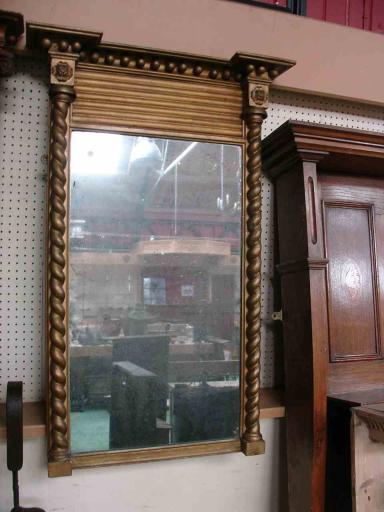 19thC gilt mirror with spiral column, sold £231 (est £100)
 Pair of panelled pine doors from Redgrave Hall orangery c1760 by Henry Holland under Capability Brown for Rowland Holt, each 1.08m wide by 3.78m high, sold £220 (est £250)
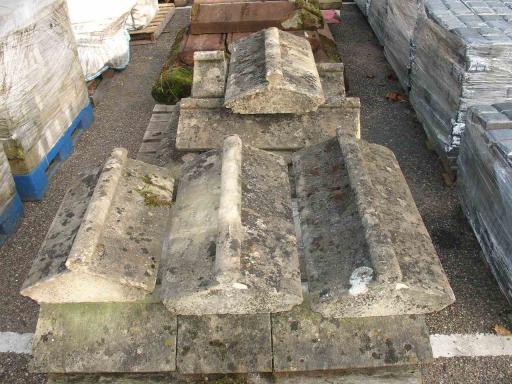 14ins roll ridge stone coping, sold £300 (est £300)
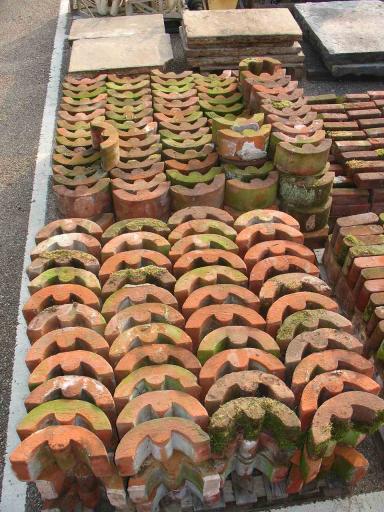 Old brick shapes from Brome Hall, Suffolk, sold £670 (est £200)
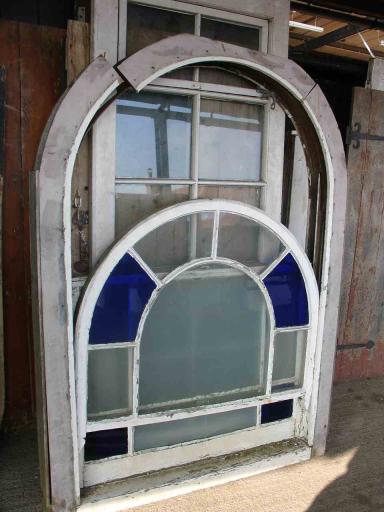 Arched top pine sash window with four blue glass panes
, sold £253 (est £150)
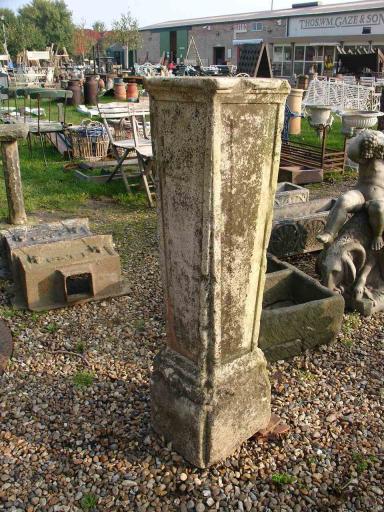 A Portland stone sundial base tapered panels on square base, the top 13ins square, sold £620 (est £300)
 TOP LOT: a pair of compo lions couchant on plinths, sold £1,320 (est £1,200)
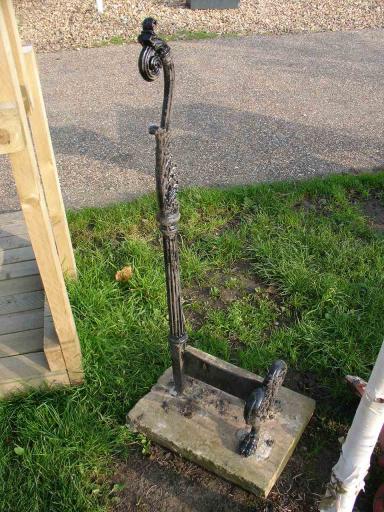 A cast iron boot scraper with decorative support set on a stone slab, sold £264 (est £150)
 Six-sided steel tree seat, sold £440 (est £300)
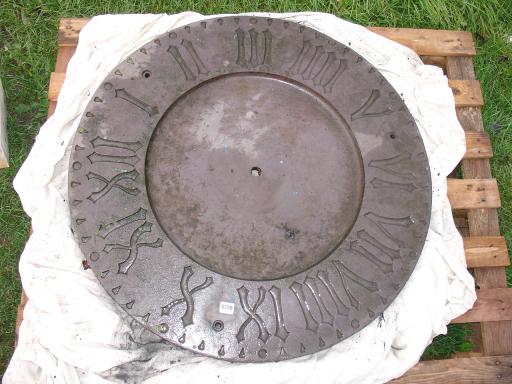 Late 19thC slate clock face 3ft dia 2ins thick, Roman numerals incised, minutes marked, sold £464 (est £400)
Diss, Norfolk UK - Site
Friday, September 29, 2006
Mill bricks get reused by Asda
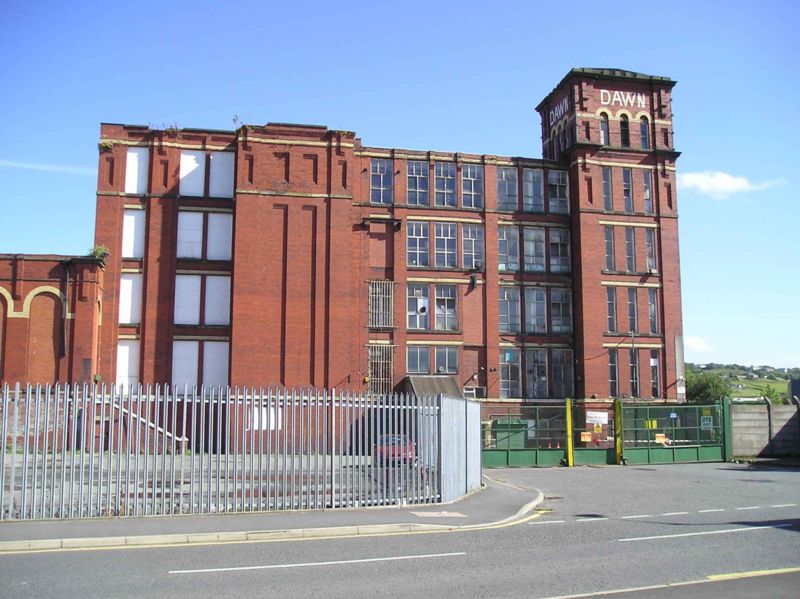 Photo: Dawn Cotton Mill as it was in July 2006 at commencement of demolition by D Hughes Demolition. [Photo: Wikipedia
Video: A video showing demolition of the north-east goods lift tower. [Video: Sunset on the Dawn
Oldham, Lancashire UK - DAWN Mill in Shaw is being demolished to allow the building of a new 35,000 square foot Asda store. Bricks are being salvaged from the 1900 cotton mill, some of which are being reused in the new eco-friendly timber-framed store located in Shaw.
NOTES:
1. The eco-friendly timber frame is certified by the PEFC (Programme for the Endorsement of Forest Certification). Asda's press release says: The UK Timber Frame Association believes that timber is, without question, the most environmentally acceptable material used in modern construction. No alternative material offers the same unique combination of environmental benefits: natural, organic and non-toxic; recyclable, biodegradable and waste efficient; renewable – for instance, European softwood plantations are currently in surplus production with standing stocks of timber increasing annually by 252 million m3 - almost 30 times the UK annual consumption of wood (source UN-ECE FAO TBFRA 2000).
2. We have asked Asda for more information about the number of bricks salvaged and reused, and will post any reply here.
Tuesday, June 27, 2006
SalvoFAIR: Mark meets the reclaimed Roman bricks
Today Mark was blessed by the blissful passers-by outside St Albans abbey, filmed by the crew from Richard & Judy, and fought the devil of recycling up the hill out of St Albans on his way north to Wheathampstead and Knebworth.
The video clip shows Mark engaged in a philosophical discussion with local youth, who boisterously celebrated his journey with a roly poly race (not shown here for legal reasons) and a rousing hurray and throwing of caps into the air . . . or something like that.
Next stop Wheathampstead, hopefully tomorrow.
Monday, June 26, 2006
SalvoFAIR: Christian brick reclaimers of St Albans
St Albans, Hertfordshire, UK - MARK McGowans progress to Knebworth would not be complete without a visit to St Albans Abbey, a former Benedictine monastery built by Paul of Caen using reclaimed bricks collected by Ealdred and Ealmer, abbots in the 900's, from the ancient Roman town of Verulamium.
Here is what Encyclopedia Britannica says:
Shortly after the martyrdom of St Alban, probably in 303, a church was built on the spot where he was slain, and in 793 Offa, king of Mercia, who professed to have discovered the relics of the martyr, founded in his honor a monastery for Benedictines, which became one of the richest and most important houses of that order in the kingdom. The abbots, Ealdred and Ealmer, at the close of the 10th century began to break up the ruins of the old Roman city of Verulamium for materials to construct a new abbey church; but its erection was delayed till the time of William the Conqueror, when Paul of Caen, a relative of Archbishop Lanfranc, was in 1077 appointed abbot. The cathedral at Canterbury as built by Lanfranc was almost a reproduction of St Stephens, Caen; but Paul, while adopting the same model for St Albans, built it on a much larger scale. The church was consecrated in 1115, but had been finisl~ed some years before. Of the original Norman church the principal potions now remaining are the eastern bays of the nave, th~ tower and the transepts, but the main outlines of the building are still those planned by Paul. It is thus one of the most important specimens of Norman architecture in England, with the special characteristic that, owing to the use of the flat broad Roman tile, the Norman portions are peculiarly bare and stern.
TV and radio companies have begun to take an interest in Mark's travels, and Channel 4's Richard & Judy film crew is planning to catch up with Mark on Tuesday at St Albans to make a short film, scheduled to appear on their Wednesday programme. Hopefully the message will be broadcast that the reuse of reclaimed bricks was a well-established Christian acitivity, and that Roman bricks reused a thousand year's ago in an Early English abbey are still performing sterling service in the year 2006. The UK government is very keen to crush old bricks, for no useful purpose, instead of reusing them.
Footnote: Every 12 bricks embodies the energy of a gallon of petrol. The UK makes 3,000 million new bricks a year and destroys 3,000 million old bricks a year. The total embodied energy destroyed in the UK by wasting old building materials is enough to heat 10 million homes. Architectural Salvage Source in London Colney, a stone's throw from St Albans, are today's brick reclaimers . . . and they will be selling reclaimed bricks at this year's Salvo Fair at Knebworth.
Here is what Encyclopedia Britannica says:
Shortly after the martyrdom of St Alban, probably in 303, a church was built on the spot where he was slain, and in 793 Offa, king of Mercia, who professed to have discovered the relics of the martyr, founded in his honor a monastery for Benedictines, which became one of the richest and most important houses of that order in the kingdom. The abbots, Ealdred and Ealmer, at the close of the 10th century began to break up the ruins of the old Roman city of Verulamium for materials to construct a new abbey church; but its erection was delayed till the time of William the Conqueror, when Paul of Caen, a relative of Archbishop Lanfranc, was in 1077 appointed abbot. The cathedral at Canterbury as built by Lanfranc was almost a reproduction of St Stephens, Caen; but Paul, while adopting the same model for St Albans, built it on a much larger scale. The church was consecrated in 1115, but had been finisl~ed some years before. Of the original Norman church the principal potions now remaining are the eastern bays of the nave, th~ tower and the transepts, but the main outlines of the building are still those planned by Paul. It is thus one of the most important specimens of Norman architecture in England, with the special characteristic that, owing to the use of the flat broad Roman tile, the Norman portions are peculiarly bare and stern.
TV and radio companies have begun to take an interest in Mark's travels, and Channel 4's Richard & Judy film crew is planning to catch up with Mark on Tuesday at St Albans to make a short film, scheduled to appear on their Wednesday programme. Hopefully the message will be broadcast that the reuse of reclaimed bricks was a well-established Christian acitivity, and that Roman bricks reused a thousand year's ago in an Early English abbey are still performing sterling service in the year 2006. The UK government is very keen to crush old bricks, for no useful purpose, instead of reusing them.
Footnote: Every 12 bricks embodies the energy of a gallon of petrol. The UK makes 3,000 million new bricks a year and destroys 3,000 million old bricks a year. The total embodied energy destroyed in the UK by wasting old building materials is enough to heat 10 million homes. Architectural Salvage Source in London Colney, a stone's throw from St Albans, are today's brick reclaimers . . . and they will be selling reclaimed bricks at this year's Salvo Fair at Knebworth.
Sunday, May 28, 2006
Reclaimed bricks stolen, man in prison
Georgia, USA Suspected Brick Thief Arrested . . . Savannah gray bricks are a part of the landscape in Savannah's historic district, and a tempting target for thieves. They're worth a lot for construction and decoration. We found one case where an aware business owner helped police crack the case of her own stolen bricks. Savannah Day Spa is a place where many go to relax and get away, but someone got away with something that doesn't belong to them. Sunday, someone stole the bricks, which cost in between $5 and $50 apiece, from the behind the spa. The owner noticed the bricks were gone on Monday, but the thieves didn't get very far. Thanks to the security cameras that the spa has, the thieves were all caught on tape . . . [Video clip and more]
Historic Bricks Stolen from Downtown Savannah Business . . . One man is already in jail and two more are on the loose after police said they are caught on tape stealing historic bricks from Savannah Day Spa. According to a Savannah-Chatham police report the bricks, valued at more than $15,000, were stored beneath a stairwell outside the downtown business. Police said they arrested 45-year old Raymond Floyd in connection with the incident after the owner of the business spotted Floyd with some of the bricks on Thursday morning while driving near where the theft occurred. They said the rest of the bricks were found in a shopping cart in the 200 block of Oglethorpe. Police are still looking for the other two men in connection with the theft . . . [WSAV3]
NOTE: '$50 apiece' sounds a little excessive as a valuation for old bricks - even $5 seems a lot. This may be a case of slight media exaggeration, and could even spawn more copycat thefts. The total stolen was believed to be 300 bricks.
Historic Bricks Stolen from Downtown Savannah Business . . . One man is already in jail and two more are on the loose after police said they are caught on tape stealing historic bricks from Savannah Day Spa. According to a Savannah-Chatham police report the bricks, valued at more than $15,000, were stored beneath a stairwell outside the downtown business. Police said they arrested 45-year old Raymond Floyd in connection with the incident after the owner of the business spotted Floyd with some of the bricks on Thursday morning while driving near where the theft occurred. They said the rest of the bricks were found in a shopping cart in the 200 block of Oglethorpe. Police are still looking for the other two men in connection with the theft . . . [WSAV3]
NOTE: '$50 apiece' sounds a little excessive as a valuation for old bricks - even $5 seems a lot. This may be a case of slight media exaggeration, and could even spawn more copycat thefts. The total stolen was believed to be 300 bricks.
Subscribe to:
Posts (Atom)
Featured
Drummond Shaw interviewed in 2008
Hindhead, Surrey UK - DRUMMOND Shaw of Drummonds Architectural is interviewed by Thornton Kay of Salvo in the back yard of his Hindhead, Su...

-
Milton Common, Oxfordshire UK - LONDON Architectural Salvage & Supply Co Ltd, aka Lassco, having spent the last few years repositi...
-
 Images from This is Cornwall TERRY Gray, known familiarly as Trader Gray, ran the Shiver Me Timbers salvage yard in Penzance, Cornwall UK. H...
 -
Hindhead, Surrey UK - DRUMMOND Shaw of Drummonds Architectural is interviewed by Thornton Kay of Salvo in the back yard of his Hindhead, Su...

