English Heritage is facing scrutiny from Britain’s new coalition government over claims of a conflict of interest which allegedly saw it “abuse” its planning powers in favour of a commercial partner. English Heritage are currently selling self branded fireplaces, It is argued that its organisational structure is designed to protect against conflicts of interest between its commercial activities and its advisory role.
Liberal Democrat MP and secretary for Scotland, Michael Moore, is investigating a complaint that the quango discriminated against specialist fireplace manufacturer Thistle & Rose – a firm based in his constituency – in favour of a rival firm licensed to sell a range of “English Heritage”-branded fireplaces.
In a letter before claim sent to English Heritage’s lawyers, Thistle & Rose’s solicitor warned that it was seeking damages as a result of its losses. “EH enjoys a dominant position by playing a regulatory role as the body selected by the UK government to secure the preservation of historic buildings in England,” the letter stated. “Simultaneously, EH has the ability to compete for commercial gain for the sale of traditional fireplaces for such listed buildings. It is our client’s position that, from 2008 onwards, EH abused that dominant position by seeking to exclude the commercial rivals of its chosen commercial partner, Acquisitions.”
bd
Showing posts with label antique fireplaces. Show all posts
Showing posts with label antique fireplaces. Show all posts
Wednesday, June 30, 2010

Tuesday, September 29, 2009
Christie's to handle Nick Gifford-Mead's scaling-down sale

Above: A George III Carved and Gilded Wood Chimneypiece In the manner of Thomas Johnson, circa 1760. The jambs and frieze with tenuous rococo ornament, mounted on a later painted panel, with statuary marble slips 53in. (136cm.) high; 64in (162.5cm) wide; the opening 44in. (113cm.) high x 40in. (101.5cm.) wide. Estimate: £15,000-20,000
London UK -
Thursday 29 October, 10.30am
Christie’s South Kensington
NICHOLAS Gifford-Mead started dealing in architectural antiques over thirty-five years ago and has been specialising in fire furniture, particularly in chimneypieces, ever since. Adopting the fundamental ethos that the stock must be original or sympathetically restored to realise it's true form, Nicholas travels extensively to source his stock in order to furnish some of the most prestigious houses in Great Britain and abroad, and Christie’s South Kensington is proud to be the next venue to be supplied with a selection of this stock which will be for sale in October 2009.
With estimates ranging from £500 to £50,000, an extensive collection of fine English and European chimney pieces, fire backs, andirons, shovels, tongs, fenders and sculpture will be on offer, comprising of approximately 170 lots, all of which embody Nicholas’ astute eye and unsurpassed depth of understanding, knowledge and interest in the field. Dealing in some of the best architectural items to be found from both the British Isles and abroad, Nicholas Gifford-Mead prides itself on the originality and provenance of its pieces which combined with a distinguished individual taste make for a compelling auction of architectural antiques.
Highlights include the simple elegance and restrained rococo style of a George III carved and gilded wood chimney piece (estimate: £15,000-20,000) alongside the grandeur of a large Italian stone chimney piece with armorial overmantle (estimate: £4,000-6,000); complemented by a selection of fire irons including a George III steel and brass set (estimate: £1,200-1,800) with with ball-knop finials and the shovel blade pierced with lattie ornament and a range of elegant fire grates including a large polished steel and cast iron fire grate in the George III style (estimate: £3,000-5,000) – all of which would add the perfect finishing touch to any home this winter.

Above: A Set of George III Steel And Brass Fire Irons. Late 18th century. With ball-knop finials, the shovel blade pierced with lattice ornament. Estimate: £1,200-1,800

Above: A Large Polished Steel and Cast Iron Fire Grate. In the George III style, late 19th or early 20th century. Of serpentine outline, the railed basket flanked by foliate engraved panels, above a fluted pierced fret within tapering standards applied with paterae bosses and surmounted by urn-shaped finials 32.1/2in. (82.5cm.) high; 34.1/4in. (87cm.) wide; 20in. (51cm.) deep. Estimate: £3,000-5,000

Above: A Large Italian Stone Chimneypiece Armorial Overmantel. Estimate: £4,000-6,000
Christie's plc
Monday, September 14, 2009
Most successful summer yet for IBS Reclaim

Above: IBS Reclaim Ltd in Oakley, Bucks
Oakley, Buckinghamshire UK - IBS Reclaim Ltd has announced that summer 2009 was the most successful yet; there was a 400 percent increase in sales in July compared to 2008. Contracts ranged from the supply of reclaimed York stone flagstones to Sykes & Son Ltd for a prestige refurb of John Keats House*, London, to the the purchase of nearly 600sqm of reclaimed flagstones and 200 tonnes of rare Denner Hill setts from the most expensive UK house outside London. The reclaimed flags sold in record time due to advertising on SalvoWEB, to building contractors and private individuals. Some flags even went to Austria. There was a major interest in reclaimed doors, again due to adverts on Salvo, with a stock clearance of some forty doors at £40 each, and a resulting increase in reclaim sales as well as enquiries for IBS made-to-measure service. This year IBS use of the SalvoWEB enhanced listing and build-a-button system is first out of 37,770 registered users.
David Marlow, manager of IBS Reclaim Ltd, said, "The development work at IBS continues this year with an antique and reproduction fireplace and radiator centre opening on the first floor of our new warehouse, a new section of both made to measure recraft doors and reclaimed doors is underway, and on the ground floor an area of Mike Corbett's cast stone products is displayed along with more reclaimed items. We also have a new paving section. During the 2008 video interview with Drummond Shaw**, he said that the future was towards new products. IBS agrees and tries to mix reclaimed and new products to complement each other."
Apart from its sales and redevelopment, IBS has also donated old stone samples from its reclaimed stocks to Dr Nick Cutler of Oxford University's Centre for the Environment who was making a study of biodeterioration which includes the effects of algae and lichen on stonework. He was fascinated by David Marlow's knowledge of Sarsen stone and Denner Hill stone history especially the story of the snipers***.
David, who is by trade a street mason, has fond memories of using Denner Hill at Pinewood Studios in 1985 aged 22 and his father - who trained him and has just retired after laying York stone for 46 years - built the Little Shop of Horrors film set which filled the 007 studio, at the time the largest sound stage in Europe. The stone used included Denner Hill kerb reclaimed from near Aylesbury. "I laid two eight-wheeler lorryloads of Denner Hill setts and kerb. Working from 400 photographs I recreated a genuine street scene of Skid Row in downtown America within the studio, working for construction manager Michael Redding of James Bond fame, alongside David Geffen, producer for Warner Brothers. We constructed everything at foot level in stone instead of the usual hardboard and cardboard imprinted and painted, due to the rain scenes and high level drop takes for rain, the full scale set was three stories high with a $30m budget. I was there for about four months," he said.
IBS are currently looking to buy reclaimed items especially stone surrounds.
Telephone 01844 239400
IBS Reclaim Ltd
* John Keats, the poet, wrote Ode On A Grecian Urn at the Grade I listed Keats House, a regency villa on Hampstead Heath, and it was from there that he set out for Rome, where he died prematurely aged 25.
** Video interview of Drummond Shaw in 2008

Above: Denner Hill setts
*** David Marlow writes: Denner Hill stone was once the source of a flourishing local industry, dating back to at least the mid nineteenth century and earlier. The best deposits were to the north of High Wycombe - Bryant's Bottom, Denner Hill, North Dean, Naphill and Walter's Ash. The blocks or boulders of hard sandstone were found at depths varying from six to sixty feet and were located by workers probing the ground with long instruments known as snipers. The boulders varied in size, one at Walter's Ash was reported to be around twelve feet in height and weighed over three hundred and fifty tons. These blocks were split to produce cobbles, kerbstone, setts, building blocks, river stepping stones, cottage door steps and gateposts. Building blocks were used in the repair of Windsor Castle. Some streets in both Windsor and Aylesbury are paved with this stone. Denner Hill Stone quoins were also used with local brick and flint within the High Wycombe area known as Chepping Parish.
Tuesday, July 28, 2009
Caring for antique fireplaces
Richard Billington an antique fireplace and mantelpiece expert working for Westland London gives advice on how to care for antique fireplaces;
Cracked or damaged cheek tiles
Many antique fireplaces have cheeks inset with patterned and painted tiles. If the damage is minor a small crack, for instance you can do a discreet repair by wiping some epoxy glue into the crack and allowing it to dry, then painting it with matching enamel paint if necessary.
Stripping paint from fireplace grates and surrounds
Often, old fireplace mantels and grates were painted over in an attempt to brighten or modernize. If the fireplace surround or grate is of cast iron, you can use a chemical paint stripper safely. Follow the package directions, then wash off any remains of the stripper with warm water. Treat the grate with rust remover, and polish with grate polish.
If the mantelpiece is of wood, use a solvent based stripper and avoid harsh alkalis. Wire wool and stiff brushes can make short work of removing old finish and paint and preparing the wood for new polish and finishing.
Take especial care with fireplaces that seem to be of marble or stone. Many antique fireplaces were finished with faux marble finishes created in paint and enamels by master crafters. Before you attack the job, start with a discreet, small area and the gentlest chemicals. Strip away a small area to be certain that you arent removing the finish itself. Be prepared with neutralizers to halt any damage before it gets too bad.
Cleaning antique fireplaces
The cleaning method used for antique fireplaces varies with the type of materials used in the construction of the fireplace. As noted in the section on stripping paint above, be aware that some marble fireplaces are actually enameled wood or slate. Clean gently until you are certain what you are dealing with.
Wooden antique fireplaces
Clean wooden mantelpieces and surrounds with quality wood cleaner and polish regularly to remove soot and smoke buildup.
Cast iron grates and antique fireplaces
Clean with methylated spirit and soft cloths, applying to a small area at a time and wiping until the cloths come away clean. Buff the grate using black lead or graphite grate polish, following package directions, or give it a thin coat of matte black stove paint and a coating of wax.
Slate fireplace surrounds
Clean smooth slate with a soft cloth and water with washing-up liquid. Be sure to wring the cloth well slate is porous enough to absorb excess fluids. You want to use a damp cloth, and then rinse with a damp cloth and clean water. When its dry, give it a good buff with a soft, dry cloth.
Clean up rough slate with a scrubbing brush and washing-up liquid, and rinse it thoroughly.
Cleaning marble antique fireplaces
Marble requires special care. Keep in mind that marble is porous, and will dissolve if exposed to acids. Wipe up any spills immediately with a soft cloth.
To clean marble, use a soft cloth with soap flakes dissolved in warm water. Wring the cloth well, and give the marble a good scrub, then wipe with a clean, damp cloth. Polish it up with a dry cloth, or use an oil-based marble finish.
Antique fireplaces dont require a lot of care, but if you tend to the few needs they do have regularly, theyll go on gleaming and accenting your home with their beauty for generations.
Professional Articles Directory about Home Improvement
Westlands
Cracked or damaged cheek tiles
Many antique fireplaces have cheeks inset with patterned and painted tiles. If the damage is minor a small crack, for instance you can do a discreet repair by wiping some epoxy glue into the crack and allowing it to dry, then painting it with matching enamel paint if necessary.
Stripping paint from fireplace grates and surrounds
Often, old fireplace mantels and grates were painted over in an attempt to brighten or modernize. If the fireplace surround or grate is of cast iron, you can use a chemical paint stripper safely. Follow the package directions, then wash off any remains of the stripper with warm water. Treat the grate with rust remover, and polish with grate polish.
If the mantelpiece is of wood, use a solvent based stripper and avoid harsh alkalis. Wire wool and stiff brushes can make short work of removing old finish and paint and preparing the wood for new polish and finishing.
Take especial care with fireplaces that seem to be of marble or stone. Many antique fireplaces were finished with faux marble finishes created in paint and enamels by master crafters. Before you attack the job, start with a discreet, small area and the gentlest chemicals. Strip away a small area to be certain that you arent removing the finish itself. Be prepared with neutralizers to halt any damage before it gets too bad.
Cleaning antique fireplaces
The cleaning method used for antique fireplaces varies with the type of materials used in the construction of the fireplace. As noted in the section on stripping paint above, be aware that some marble fireplaces are actually enameled wood or slate. Clean gently until you are certain what you are dealing with.
Wooden antique fireplaces
Clean wooden mantelpieces and surrounds with quality wood cleaner and polish regularly to remove soot and smoke buildup.
Cast iron grates and antique fireplaces
Clean with methylated spirit and soft cloths, applying to a small area at a time and wiping until the cloths come away clean. Buff the grate using black lead or graphite grate polish, following package directions, or give it a thin coat of matte black stove paint and a coating of wax.
Slate fireplace surrounds
Clean smooth slate with a soft cloth and water with washing-up liquid. Be sure to wring the cloth well slate is porous enough to absorb excess fluids. You want to use a damp cloth, and then rinse with a damp cloth and clean water. When its dry, give it a good buff with a soft, dry cloth.
Clean up rough slate with a scrubbing brush and washing-up liquid, and rinse it thoroughly.
Cleaning marble antique fireplaces
Marble requires special care. Keep in mind that marble is porous, and will dissolve if exposed to acids. Wipe up any spills immediately with a soft cloth.
To clean marble, use a soft cloth with soap flakes dissolved in warm water. Wring the cloth well, and give the marble a good scrub, then wipe with a clean, damp cloth. Polish it up with a dry cloth, or use an oil-based marble finish.
Antique fireplaces dont require a lot of care, but if you tend to the few needs they do have regularly, theyll go on gleaming and accenting your home with their beauty for generations.
Professional Articles Directory about Home Improvement
Westlands
Friday, October 03, 2008
Restoring a Regency Fireplace
Matt Davies of Premier Fires and Floors Restoration
Video by Colleen Gowlett
Matt Davies of Premier Fires and Floors Restoration removes a Regency fireplace from a period house in Islington. He and his team fully restore the fireplace which was in pieces when it was removed, fit a new hearth, craft matching bull's eyes which have been lost over the years and make the insert larger as it was falling out of the wall. The fireplace is then fitted back into the house fully restored.
Video by Colleen Gowlett
Matt Davies of Premier Fires and Floors Restoration removes a Regency fireplace from a period house in Islington. He and his team fully restore the fireplace which was in pieces when it was removed, fit a new hearth, craft matching bull's eyes which have been lost over the years and make the insert larger as it was falling out of the wall. The fireplace is then fitted back into the house fully restored.
Thursday, April 17, 2008
Chimneypieces at auction better private treaty hopes
Simon Chorley Art & Antiques, Prinknash Abbey Park Gloucestershire

Above: A George III statuary white marble chimneypiece, circa 1770. Sold for £20,000.

Above: A late Century English statuary white marble chimneypiece, circa 1880. Sold for £19,000

Above: An English late 18th Century statuary white marble chimneypiece, circa 1785. Sold for £21,000
Private treaty or the open market was the decision that a Gloucestershire based charity had to make when moving from premises rich in fixtures and fittings, which would be incongruous in the new building. Advised by their bankers concerned about security, that a private sale would be preferable, the charity put the matter in the hands of Simon Chorley's auction rooms in Gloucestershire. "We looked at the possibility of a private treaty sale, but the amount of material meant it would be a huge commitment for a single buyer," said Mr Chorley.
With no one party forthcoming the lots went to auction on March 6 at Prinknash Abbey Park Rooms. Proving the potency of selling in the saleroom, the move paid off. The sale saw everyone of the 134 lots get away bringing a hammer total of £138,000.
Plenty of buyers were in the room and on phones when the seven 18th and 19th century chimney piece closed the day. It carried a modest overall estimate of £80,000-101,000 they sold to dealers at a total of £112,000.
Best seller was a c.1785 English statuary white marble chimneypiece with an inverted breakfront shelf above a frieze carved with a central female bust and scrolling acanthus and lidded vases. A sienna marble surround to the aperture added colour and quality. Measuring 4ft 6in high by 5ft 3in wide, the chimneypiece came complete with a later grate, brass hood, tiled back hearth and curb. Estimated at £15,000-18,000 it sold to a dealer in the room at £21,000.
Simon Chorley

Above: A George III statuary white marble chimneypiece, circa 1770. Sold for £20,000.

Above: A late Century English statuary white marble chimneypiece, circa 1880. Sold for £19,000

Above: An English late 18th Century statuary white marble chimneypiece, circa 1785. Sold for £21,000
Private treaty or the open market was the decision that a Gloucestershire based charity had to make when moving from premises rich in fixtures and fittings, which would be incongruous in the new building. Advised by their bankers concerned about security, that a private sale would be preferable, the charity put the matter in the hands of Simon Chorley's auction rooms in Gloucestershire. "We looked at the possibility of a private treaty sale, but the amount of material meant it would be a huge commitment for a single buyer," said Mr Chorley.
With no one party forthcoming the lots went to auction on March 6 at Prinknash Abbey Park Rooms. Proving the potency of selling in the saleroom, the move paid off. The sale saw everyone of the 134 lots get away bringing a hammer total of £138,000.
Plenty of buyers were in the room and on phones when the seven 18th and 19th century chimney piece closed the day. It carried a modest overall estimate of £80,000-101,000 they sold to dealers at a total of £112,000.
Best seller was a c.1785 English statuary white marble chimneypiece with an inverted breakfront shelf above a frieze carved with a central female bust and scrolling acanthus and lidded vases. A sienna marble surround to the aperture added colour and quality. Measuring 4ft 6in high by 5ft 3in wide, the chimneypiece came complete with a later grate, brass hood, tiled back hearth and curb. Estimated at £15,000-18,000 it sold to a dealer in the room at £21,000.
Simon Chorley
Friday, October 12, 2007
Westland & Co take over the whole church


Above: This piece is typical of the Westland style. A Thomas Jekyll, Barnard Bishop & Barnard, Victorian cast iron insert with kakkumon decoration - well yes we have all seen these before, but the twist is the very unusual very simple but rare and contemporary 1870's Aesthetic-style ash wood surround, and all inset with tiles of birds and flowers hand decorated in the Japanese taste, and tinted black grey and satsuma. Very fetching.

Shoreditch, London UK - WESTLAND & Co, owned by Geoff Westland, earlier this summer took over the whole of St Michael's Church as showrooms for the architectural garden and decorative antiques business. Gone are the lasts and museum display cases, replaced by antique chimneypieces, lighting, mirrors, panelling, fountains, grills and doors. Lassco, which has occupied half the church since Adrian Amos founded London Architectural Salvage, has now vacated its half and relocated to Brunswick House and the Three Pigeons.
"I am very content with the situation," Mr Westland said, "and also happy that Adrian has given it his blessing." Geoff Westland and Adrian Amos aquired the church thirty years ago together with the late Craig Meredith and the three of them founded a company to restore and use it. Craig Meredith died two year's ago.
The web site proclaims the 'Far Pavilions' . . . 'After 30 years of shared occupation in this vaulted and cloistered English Heritage Grade I Listed location, Westlands have continued to evolve and extend their display into the whole interior so that that there are now 16 large galleries showing a very comprehensive selection of antique chimneypieces , fire grates , furniture , lighting , architectural elements and ornamentation of all kinds, on two levels and in the courtyard. This extraordinary environment of interconnecting galleries of ever changing intimate settings and panoramic vistas abundantly stocked unfolding before visitors takes your breath away. The variety and 'splendidity' of the venue, to quote Woody Allen, is fascinating, informative and inviting, providing a tranquilly pleasing, wandering, browsing experience approaching that of a compact museum. Set in a park environnment on the west side, in the bustling sophisticated south Shoreditch triangle on the City of London financial centre's doorstep, well complimented with fine restaurants, art galleries & hotels, you will find Westland London "at the sign of the Ascot Racecourse Clockface".
Westland London
Friday, October 05, 2007
Humberts sale of Extreme Architecture at Hurst Farm

Chilham, Caterbury UK Thursday 27th & Friday 28th September 2007
Up a windy path in the middle of nowhere in the pouring rain was the setting of the iconic sale of the entire stock of architectural salvage, restoration material, garden statuary, stoneware etc of Extreme Architecture.com together with the antiques and decorative furniture and effects from the residential property of Hurst Farm.
Everything had a price tag including the seats inside the marquee, the auctioneer motored through the 1249 lots, whilst the punters like vultures quickly snapped up each piece. Particular highlights included the Temple Bar Lodge which was once the main entrance into London and designed by Sir Christopher Wren. This sold for £26,000 to a UK private. The Royal Box at Ascot remained unsold, however the advertising created from this packed sale will perhaps help to sell it shortly. Dennis Buggins has already booked his stand for next year's Salvo fair to which he is planning to bring the Royal box and the Lloyd's Portico.

Above: Hurst Farm, selected bricks and tiles for auction

Above: The Lloyd's of London portico, an impressive Portland stone portico carved with the Lutine bell
Tuesday, August 07, 2007
Evan Blum's competitors - dumpsters, ignorance and stupidity
New York USA - ON a CBS interview Evan Blum of New York's Demolition Depot said that his biggest competitors are the dumpster, ignorance and stupidity. A tour around the depot follows showing a load of bathroom bits, including a Mott fireclay tub, a $40k fireplace owned by Rockefeller, and a lot of doors.
CBS video
CBS story
Demolition Depot
CBS video
CBS story
Demolition Depot
Sunday, June 17, 2007
Salvo Fair guide (pdf download)

Knebworth, Hertfordshire UK - The Salvo Fair 2007 guide (inc SalvoNEWS 265 Friday 22 June 2007) is now out.
Contents: Salvo Fair exhibitor list (so far), 300 handy hints for buying and using salvage, talks and workshops sponsored by Period Living magazine, and the text and illustrations of the talk by Julian Radcliffe, chairman of the Art Loss Register, about the role of the ALR, garden statuary architectural salvage and good title.
The other talks scheduled for the afternoon of the trade day at Salvo Fair on Friday 29 June are Nicole Lazarus of BioRegional Reclaimed on carbon footprints and reclaimed materials, a round table discussion on fair trade led by Peter Weldon and Karen Glen - and should it be a part of the new trade association, an update on BigREc Survey and standards of supply by Thornton Kay, a report on Deco07, the USA Building Materials Reuse Association's conference by Steve Tomlin. There may be a discussion about a roadmap for the launch of the UK architectural salvage trade association.
Download the colour version in Acrobat pdf format (link below).
The print version will be mailed to SalvoNEWS paper subscribers on Fri 22 Jun 2007.
A UK SalvoNEWS subscription is GBP50 (free to Salvo Code dealers) and includes access to SalvoWEB Trade Ads, SalvoEMAILS and a complimentary entry on the online Salvo Directory. Subscribers can receive just the print edition, or the pdf edition, or both. Overseas print copies are sent by surface mail to save energy.
PLEASE NOTE: Update on Red Card training day, Thursday 28th Jun at Knebworth, followed by testing and accreditation on Friday 29th Jun at Knebworth:
So far four people have booked to go on the inaugural 'Red Card' certificate of competence for reclamation and salvage operatives course set up by Martin Morrell of CITB and Howard Button of NFDC. Please book now by phone (020 8400 6222 or 01225 422300) or email thornton at salvoweb dot com if you or your staff would like to participate.
Salvo Fair guide (2MB pdf download)
Tuesday, May 29, 2007
Reclaimed water garden at Salvo Fair
Above: A quick tour around V & V Reclamation, Hertford, showing some of the elements they will be bringing for their reclaimed water garden at Salvo Fair, Knebworth, this year.
Knebworth, Hertfordshire UK - WHAT do Harrod's Dispensary, Lord Snowdon's London Zoo Aviary, and Paternoster Square next to St Paul's Cathedral have in common? The answer is that pieces of them will appear on V & V Reclamation's spectacular reclaimed water garden at this year's Salvo Fair at Knebworth.
The garden will be set out in the formal neobeauxarts style, paved with grass and bordered by reclaimed flagstones. The front of the stand will be flanked by ten circular exposed aggregate planters from Stevenage town centre, turned into pools with small pink Aberdeen granite obelisks alternating with riven Liscannor stone left over from last year's Chelsea Flower Show.
A sentry box from Whitechapel, a communal washing trough from Cheshire, a post office pillar box from Mortlake (finish of the annual Oxford and Cambridge boat race), carved stonework from St Thomas Hospital and a sixteen foot high decorative cast iron column topped by a statue will set off the enclosing walls, seating and plants. It should be a delight.
Everything will be for sale, with 50 businesses and 500 tonnes of stock covering 5 acres of Knebworth's beautiful deer park, so come along for a day of browsing and buying, with some inspiring too.
Salvo Fair, Sat 30 Jun and Sun 1 Jul 2007, Knebworth House, Hertfordshire. By car to J7 A1(M). By train to Stevenage, then a 10 min taxi ride. TRADE DAY: Fri 29 Jun. Web www.salvo-fair.com
Salvo Fair
Tuesday, May 22, 2007
Lassco open Three Pigeons outpost
Milton Common, Oxfordshire UK - LONDON Architectural Salvage & Supply Co Ltd, aka Lassco, having spent the last few years repositioning itself in Ropewalk Bermondsey and Brunswick House Vauxhall, south of the Thames, has finally left the former church of St Michael's, Shoreditch, in the heart of City of London, and opened a former pub called The Three Pigeons just off junction seven of the M40 in Oxfordshire.
The ground floor is a warren of decorative and architectural antiques, while oustide in the grounds is a display or old and new garden ornament. The day I was there Thames Valley Antique Dealers Association had organised a swap shop in the Three Pigeons' car park, a fish and chip van was providing lunch, music was blaring out and everyone was in good cheer. It is early days yet, but both Anthony Reeves, the manager, and Adrian Amos, the empresario, seemed well pleased with their new baby.
St Michael's church just off Commercial Road, Shoreditch, which had been Lassco's original base from 1977 has now been taken over completely by Geoff Westland and rebranded Westland London to become London's principal antique fireplace showrooms.
Lassco
Westland London
The last shot of the mini-video above shows a pile of green-painted doors from the cells of Clerkenwell Prison, which was used for Victorian Britain's political dissidents. The music is taken from Balm in Gilead by Rahsaan Roland Kirk (1936-1977) at the 1972 Montreux Jazz Festival.
Thursday, February 08, 2007
Steinitz books sea fair
 Grand Luxe moors at wealth hotspots to make it easy for up-market clients to pop in from home
USA - SEAFAIR is a very up-market antique fair on a ship that roams the US coastline parking up where the nobs hang out. It was the brainchild of David and Lee Ann Lester, former owners of IFAE, who have staged fairs in New York, Chicago, Palm Beach (where he is exhibiting this week), Miami Beach, Los Angeles, Dallas, and Hong Kong. SeaFair takes place aboard a purpose built exhibiton ship named Grand Luxe, 231ft long, 46ft beam, with a crew of 7 seamen, plus some serious security staff. It is due to commence operations later this year starting at the Hamptons.
Of interest to the architectural trade is the appearance of Steinitz amongst the list of SeaFair exhibitors. Bernard Steinitz is the grand old chineur de Paris, whose stands of gilded panelled rooms and decorative exotica were pitched last year at Grosvenor House, Maastricht, New York and Palm Beach. It will be interesting to see if others follow where Steinitz leads.
Expoships.com
Thursday, December 07, 2006
The Frits Philips sale in Eindhoven
 Lot 617: Gilt iron armillary, 1786, with auxiliary sphere - what is that about? - and painted hour ring, 131cm high. Sold €19,200 (est €4k)
 Lot 883: Relief moulded terracotta brick, 12cm by 14cm by 5cm, depicting a rampant boar, probably German 16thC. Sold €480 (est €300)
 Lot 33: Top tile lot: Nine Dutch polychrome tulip tiles, c1620-1650. Sold €11,400 (est €1k).
 Lot 470: A 16th century Flemish tondo of yellow and grisaille stained glass, now a hanger, picturing Christ on the path to Calvary, 22cm dia, which sold for €16,800 (est €3k).
 Lot 597: Jan Pieter van Bauerscheit the elder (1668-1728), Dutch carved gritstone putto holding a seal with a dog, 90cm high, the plinth carved with the letters PVB J F. Sold €20,400 (est €8k)
 Lot 601: Carved stone group of Pan and Syrinx, 19thC, on gritstone pedestal, 2.6m high overall. Sold €30k (est €40k). Mythology: In Arcadia, Pan chased Syrinx who to evade cpature was transformed into reeds from which Pan made his pan pipes
 Lot 589: Two French steel wine bottle racks, 164cm high 100cm wide 56cm deep. Sold €2,400 (est €2k)
Photos: Sotheby's
Eindhoven, North Brabant, Holland - THE death aged 101 of Frits Philips, one time head of electrical giant Philips NV, resulted in a sale by Sotheby's held on 4 December 2006. Anton and Gerald Philips started making light bulbs in Eindhoven in 1895. PSV Eindhoven, the works sports union, Philips Sports Vereniging, was founded in 1913 to celebrate the centenary of the defeat of the French in the Napoleonic wars, and is now known for its professional football club, of which Frits was a keen fan. The club is keeping his stadium seat empty as a memorial. In 1966 Frits built the Evoluon, where this auction sale was held, as a flying saucer shaped science museum gifted to the people of Eindhoven. During the war he helped Jews evade the Nazis and was put in a concentration camp for four months because of a strike at the Philips factory. The Sotheby's sale, which totaled €5.7m (£3.8m $7.3m) was of items collected by Frits and his father Anton Philips.
Sotheby's Frits sale results
Sunday, November 26, 2006
Reclamation Protocol Part 2
London UK - Part Two follows Part 1 (below) and was a summary of a fuller version printed in the journal Salvo Monthly, April & May 1995
A RECLAMATION PROTOCOL by Thornton Kay of SALVO in 1995
Many building materials are being reclaimed throughout the world, but in Europe and North America, much more could be done. In these environment-conscious times we believe that more is being trashed in richer countries than ever before. This would seem to suggest that reclamation is not as successful as it should be due to the consumer ethic that "new is best". The main reason for this is not lack of interest from consumers, who are showing an increasing willingness to buy reclaimed material, but ignorance of the market and an unhelpful attitude on the part of producers of new materials who are understandably reluctant to relinquish market share.
There are limits to the total amount of material available to be reclaimed and these limits are determined by many factors, the most important of which is the primary supply from the demolition industry of components from whole buildings and the abundant amounts placed in skips from smaller demolitions during the course of alteration and repair works. If every scrap of material available were to be reclaimed, about 30,000 tons a day in Britain, we reckon that this would still only provide reclaimed alternatives to fulfil around 5% to 10% of the total building materials market. At present we reckon that less than 1% is currently sourced from reclaimed material, and it is this small, but significant, loss of material taken to landfill sites for which we are trying to encourage a market. The majority of this material is in the form of bulk items such as timber, bricks and masonry. However, much is still lost in the form of Victorian fixtures and fittings, early 20th century features, and incredibly we still hear all too often of very valuable features, such as, in February 1995, a carved marble Georgian fire surround from Edinburgh's New Town district in a skip going to landfill.
The recycling protocol that was embodied in the sustainability clause - known as Agenda 21 - at the 1992 Rio Earth Summit gives priority to the preservation of energy content when reusing resources. Broadly speaking it states that if it takes more energy to reuse an item than it does to make a new one, then in energy terms it is better to make a new one and throw the old one away. This relates directly to the voluntary efforts being made to reduce the amount of fossil fuel expended on producing new materials, thereby reducing carbon dioxide emissions and so reducing global warming. The reasons for wanting to reduce global warming are primarily that future generations will have to cope with the considerable extra financial burden of minimising the effects of climate change, not least of which will be rising sea and river levels, which will require reduction in land mass or the expense of increased flood protection schemes. However, this is only part of the equation.
Agenda 21 also gives priority to preserving resources and respecting cultural identity. This does not have a simple formula, like the energy example above. How do you value resources such as old mahogany against new Iroko, or 300 year old Sitka spruce against 30 year old plantation Sitka? Many of the old indigenous timber species are known to be more durable, but there is no formula for making a comparison with plantation species. The environmental damage caused by forestry methods is now becoming known as a contributor to soil erosion and acid lakes and rivers. There is no formula to make comparisons between old and new timber but logic would say that it is sensible to reclaim timber rather than destroy it. It is also true that timber disposed of in unmanaged landfill will generate methane which is a greenhouse gas. As mentioned above, reclaimed timber will never replace the demand for new timber but it could reduce it by 5% to 10%, and so help preserve forests, which in turn will allow the greater use of these forests as habitat for wildlife and people. If timber is not demolished in large enough sections to be reusable, then it is possible to recycle smaller pieces. An Austrian firm is attempting to manufacture blockboard using recycled timber. If after attempts to reclaim or recycle prove impossible, then the timber should be used to provide fuel. All demolished construction materials have similar patterns of reuse opportunities, but the simple energy-based criteria is not the only one. Even energy formulae are difficult to produce. For instance, do you take the energy costs of felling wood, transporting it and converting it, do you add the energy involved to make the logging machinery, and house and transport logging workers?
The traditional manufacture of construction materials often overlap with, or even rely on, reclamation and recycling. For example, in Britain the Campaign for Real Iron is attempting to prevent the early 19th century charcoal-made wrought iron panels of early iron structures from being scrapped alongside modern mild steel, and melted down to make into new steel products. Charcoal-made wrought iron is impossible to manufacture in Britain, so as a resource it is invaluable if, like Yorkshire blacksmith Chris Topp, you make wrought iron railings with blown leaf scrolls and appreciate the difference. Outside Agenda 21, although remaining inside the Rio cultural protocol, a case can be made that old buildings and architectural items form part of the history of a culture, and so should be preserved for re-use. Even though something of the original integrity of an architectural item may be lost if that item is reused out of context, we believe that it is better used out of context than placed in landfill. Many examples exist where items rescued in the past and reused out of context, have been subsequently repatriated in their historically or architecturally correct setting at a later date. Ordinary people tend to appreciate the efforts made, although the current fashion in Britain is dictated by a small minority of historical architecture fundamentalists (which include the leading lights of Britains' conservation organisations) who would rather see both demolished buildings, and all the materials they contain, continue to be landfilled. Salvo has devised a recycling protocol with respect to the built environment that gives the following priority list for what to do with old architectural items:
1. Re-use a building without demolition or alteration. If this is not possible then:-
2. Reclaim components in as intact a way as possible. Relocate entire buildings, Reuse facades and structural elements, Reclaim whole features such as windows with their surrounds, shutters, and window furniture. Finally dismantle and Reclaim the individual items that were used to assemble a building. We define Architectural Antiques as manufactured items usually with a degree of skilled labour involved, such as carved items, doors and fireplaces, and Reclaimed Building Materials as the basic building components such as bricks and timber beams. If reclamation is not possible then:-
3. Recycle and remanufacture a new product. Reclaimed wood can be recycled to make furniture, floorboards or even blockboard. Concrete can be crushed to make recycled aggregate. Plastics can be remanufactured into new plastics products like polythene bags. If recycling is not an option then:-
4. Beneficially Destroy with energy recovery. Scrap wood and other carbon-based products can be used to fuel power plants, or for local heating or cooking. Methane can be recovered from landfill sites where carbon-based demolition waste has been tipped.
All political parties should adopt this sensible protocol in environmental policy documents on demolition waste - Reuse, Reclaim, Recycle, Destroy. This would at least create the correct theoretical background against which targeted effort and practical measures can be applied.
The UK Planning Acts have produced a planning process that creates an emotive link between local public opinion and old buildings. The concept of reusing buildings or their components again, or relocating whole buildings, does not enter into that process. Thus the local community is encouraged to believe it faces a stark choice - save intact or destroy completely. A sensible approach would be to offer a compromise - save some intact, relocate the historically important, reclaim the rest for local reuse, don't destroy anything. The old PPG15 (Planning Policy Guidance note - used by Local Authorities to interpret the Planning Acts) encouraged planners to make rarely-used conditions on demolition requiring that demolished material be reused. The latest PPG dropped these suggestions, for which the DoE said there was no room in the White Paper - which was not true, and merely pandered to the SPAB element of English Heritage. Conservationists prefer the stark choice believing that this concentrates peoples' minds and saves more buildings. This is not borne out by the facts. Even listed buildings are demolished in whole or part, and hundreds of thousands of historic unlisted buildings are demolished every year. The planning process itself also encourage eventual rapid demolition. Vandalism and theft occur as a result of buildings being left empty for years while planning disputes are resolved. During this period millions of tonnes of reclaimable materials are lost to fire and water-damage. Old buildings should never be allowed to remain unoccupied, it should be illegal. Instead, more buildings are now left unoccupied and boarded up pending their future than ever before.
Some local authorities' building control departments refuse to allow the reuse of reclaimed material. The most common reasons are that reclaimed materials contain dry rot, even if they are sound, or that reclaimed materials do not comply with modern standards. The dry rot brigade are wilfully ignorant since the spores exist in the air permanently so even brand new materials contain dry rot spores. Dry rot is created by environmental conditions that are independent of materials. Equally, planning and conservation departments have been known to refuse to allow the reuse of reclaimed materials in works requiring planning permission or listed building consents because they say that it encourages theft and demolition, and confuses the history of a building. Although theft is a problem, particularly of garden ornaments, the volume of materials stolen is small, and invariably results from the deliberate policies that allow buildings to remain empty for long periods of time. Those who believe that reclamation encourages demolition are even further down the track of complete insanity. With respect to confusing history, most buildings have changed and adapted over the years, many using old materials, or materials reused from one part of the building in another. If such policies require that materials, like a Louis XVI marble fireplace, can only be installed in an unlisted 1930s' semi, it makes a mockery of freedom of choice and good architectural sense.
The establishment of reclamation businesses is discouraged in the UK by planners, who see them as non-conforming undesirable businesses. In some areas they have ceased trading after planners have picked on them. This is despite the recycling commitment given by John Major in signing the Rio Accord. There is a glimmer of hope since the DoE planning inspectors who are called in at appeals seem to have a more sympathetic approach. We suspect that Conservation Officers have a hand in influencing decisions on local reclamation yards' planning problems. A well respected conservation-aware Midlands reclamation dealer was refused entry to an ACO sponsored conference (Association of Conservation Officers) solely on the grounds that he was a reclaimed building materials dealer. More or less every reclamation dealer has had problems with planners. What should happen is that planners should encourage reclamation, councils should earmark land and premises, conservation officers should require demolished materials to be sold to reclamation rather than landfilled, and local municipal, education, and health authorities should develop reclamation-only policies for all their demolished buildings and for a percentage (say 5%) of the procurement of construction materials. Partnership arrangements should be made between reclamation dealers and local authorities to save materials for local reuse. This could all be achieved voluntarily.
The new EC Construction Products Directive sets out to ban the sale of reclaimed materials if they are not manufactured to current euro-standards. Which, of course, they are not. Even if they were, it is no longer possible to prove since most materials are older than 75 years and detailed records of the manufacturing processes are not available. Even if they were, the quality control procedures would not have been recorded in the correct way to comply with modern standards. The Directive says that if you can't prove reclaimed materials (and they mean every single brick) comply with the standards then they must be substandard and therefore illegal. Our visit to Brussels, and meeting with Carl Heinz Zachmann, the Head of the Construction Directorate (DG12), made it absolutely clear that reclaimed materials were considered substandard, and would be banned. Even if the bureaucrats were sympathetic, legislation in Europe is dominated by small lobbies of powerful vested interests, who dictate the commercial agenda. I was told that environmental logic is of no importance in Brussels. Power talks.
A committee has been meeting to discuss an EU Demolition Waste Strategy which will inevitably lead to a Directive requiring national targets to be set for the recycling of demolition waste. From what we can glean, plans are at an advanced stage for this Directive. It will not follow the EC's own Recycling Protocol but will give any of the four recycling methods (Reuse, Reclamation, Recycling, Beneficial Destruction) equal merit. The drafting committee is being led by Germany and Denmark whose expertise in the field of reclamation is very weak and who appear to have a pathological dread of using old materials unless they have been remanufactured into something new. German federal recycling laws require that all demolition waste is separated and recycled. Specially licensed demolition contractors are paid additional money for recycling costs. But bricks are crushed and no reclamation takes place. Fly-tipping, illegal burning and the illegal export of demolition waste to neighbouring countries is common. We suspect that commercial and political pressures will result in the UK acquiescing to a proposed Demolition Waste Directive and that this will damage the UK, French, Belgian and southern European reclamation industries by encouraging recycling over reclamation. A target-driven directive will result in more capital intensive recycling, and less employment extensive reclamation. After the Directive is passed, the only recourse for the Reclamation Industry and its customers will be to break the law.
Visit the Salvo website at www.salvo.co.uk.
T Kay 1995
A RECLAMATION PROTOCOL by Thornton Kay of SALVO in 1995
Many building materials are being reclaimed throughout the world, but in Europe and North America, much more could be done. In these environment-conscious times we believe that more is being trashed in richer countries than ever before. This would seem to suggest that reclamation is not as successful as it should be due to the consumer ethic that "new is best". The main reason for this is not lack of interest from consumers, who are showing an increasing willingness to buy reclaimed material, but ignorance of the market and an unhelpful attitude on the part of producers of new materials who are understandably reluctant to relinquish market share.
There are limits to the total amount of material available to be reclaimed and these limits are determined by many factors, the most important of which is the primary supply from the demolition industry of components from whole buildings and the abundant amounts placed in skips from smaller demolitions during the course of alteration and repair works. If every scrap of material available were to be reclaimed, about 30,000 tons a day in Britain, we reckon that this would still only provide reclaimed alternatives to fulfil around 5% to 10% of the total building materials market. At present we reckon that less than 1% is currently sourced from reclaimed material, and it is this small, but significant, loss of material taken to landfill sites for which we are trying to encourage a market. The majority of this material is in the form of bulk items such as timber, bricks and masonry. However, much is still lost in the form of Victorian fixtures and fittings, early 20th century features, and incredibly we still hear all too often of very valuable features, such as, in February 1995, a carved marble Georgian fire surround from Edinburgh's New Town district in a skip going to landfill.
The recycling protocol that was embodied in the sustainability clause - known as Agenda 21 - at the 1992 Rio Earth Summit gives priority to the preservation of energy content when reusing resources. Broadly speaking it states that if it takes more energy to reuse an item than it does to make a new one, then in energy terms it is better to make a new one and throw the old one away. This relates directly to the voluntary efforts being made to reduce the amount of fossil fuel expended on producing new materials, thereby reducing carbon dioxide emissions and so reducing global warming. The reasons for wanting to reduce global warming are primarily that future generations will have to cope with the considerable extra financial burden of minimising the effects of climate change, not least of which will be rising sea and river levels, which will require reduction in land mass or the expense of increased flood protection schemes. However, this is only part of the equation.
Agenda 21 also gives priority to preserving resources and respecting cultural identity. This does not have a simple formula, like the energy example above. How do you value resources such as old mahogany against new Iroko, or 300 year old Sitka spruce against 30 year old plantation Sitka? Many of the old indigenous timber species are known to be more durable, but there is no formula for making a comparison with plantation species. The environmental damage caused by forestry methods is now becoming known as a contributor to soil erosion and acid lakes and rivers. There is no formula to make comparisons between old and new timber but logic would say that it is sensible to reclaim timber rather than destroy it. It is also true that timber disposed of in unmanaged landfill will generate methane which is a greenhouse gas. As mentioned above, reclaimed timber will never replace the demand for new timber but it could reduce it by 5% to 10%, and so help preserve forests, which in turn will allow the greater use of these forests as habitat for wildlife and people. If timber is not demolished in large enough sections to be reusable, then it is possible to recycle smaller pieces. An Austrian firm is attempting to manufacture blockboard using recycled timber. If after attempts to reclaim or recycle prove impossible, then the timber should be used to provide fuel. All demolished construction materials have similar patterns of reuse opportunities, but the simple energy-based criteria is not the only one. Even energy formulae are difficult to produce. For instance, do you take the energy costs of felling wood, transporting it and converting it, do you add the energy involved to make the logging machinery, and house and transport logging workers?
The traditional manufacture of construction materials often overlap with, or even rely on, reclamation and recycling. For example, in Britain the Campaign for Real Iron is attempting to prevent the early 19th century charcoal-made wrought iron panels of early iron structures from being scrapped alongside modern mild steel, and melted down to make into new steel products. Charcoal-made wrought iron is impossible to manufacture in Britain, so as a resource it is invaluable if, like Yorkshire blacksmith Chris Topp, you make wrought iron railings with blown leaf scrolls and appreciate the difference. Outside Agenda 21, although remaining inside the Rio cultural protocol, a case can be made that old buildings and architectural items form part of the history of a culture, and so should be preserved for re-use. Even though something of the original integrity of an architectural item may be lost if that item is reused out of context, we believe that it is better used out of context than placed in landfill. Many examples exist where items rescued in the past and reused out of context, have been subsequently repatriated in their historically or architecturally correct setting at a later date. Ordinary people tend to appreciate the efforts made, although the current fashion in Britain is dictated by a small minority of historical architecture fundamentalists (which include the leading lights of Britains' conservation organisations) who would rather see both demolished buildings, and all the materials they contain, continue to be landfilled. Salvo has devised a recycling protocol with respect to the built environment that gives the following priority list for what to do with old architectural items:
1. Re-use a building without demolition or alteration. If this is not possible then:-
2. Reclaim components in as intact a way as possible. Relocate entire buildings, Reuse facades and structural elements, Reclaim whole features such as windows with their surrounds, shutters, and window furniture. Finally dismantle and Reclaim the individual items that were used to assemble a building. We define Architectural Antiques as manufactured items usually with a degree of skilled labour involved, such as carved items, doors and fireplaces, and Reclaimed Building Materials as the basic building components such as bricks and timber beams. If reclamation is not possible then:-
3. Recycle and remanufacture a new product. Reclaimed wood can be recycled to make furniture, floorboards or even blockboard. Concrete can be crushed to make recycled aggregate. Plastics can be remanufactured into new plastics products like polythene bags. If recycling is not an option then:-
4. Beneficially Destroy with energy recovery. Scrap wood and other carbon-based products can be used to fuel power plants, or for local heating or cooking. Methane can be recovered from landfill sites where carbon-based demolition waste has been tipped.
All political parties should adopt this sensible protocol in environmental policy documents on demolition waste - Reuse, Reclaim, Recycle, Destroy. This would at least create the correct theoretical background against which targeted effort and practical measures can be applied.
The UK Planning Acts have produced a planning process that creates an emotive link between local public opinion and old buildings. The concept of reusing buildings or their components again, or relocating whole buildings, does not enter into that process. Thus the local community is encouraged to believe it faces a stark choice - save intact or destroy completely. A sensible approach would be to offer a compromise - save some intact, relocate the historically important, reclaim the rest for local reuse, don't destroy anything. The old PPG15 (Planning Policy Guidance note - used by Local Authorities to interpret the Planning Acts) encouraged planners to make rarely-used conditions on demolition requiring that demolished material be reused. The latest PPG dropped these suggestions, for which the DoE said there was no room in the White Paper - which was not true, and merely pandered to the SPAB element of English Heritage. Conservationists prefer the stark choice believing that this concentrates peoples' minds and saves more buildings. This is not borne out by the facts. Even listed buildings are demolished in whole or part, and hundreds of thousands of historic unlisted buildings are demolished every year. The planning process itself also encourage eventual rapid demolition. Vandalism and theft occur as a result of buildings being left empty for years while planning disputes are resolved. During this period millions of tonnes of reclaimable materials are lost to fire and water-damage. Old buildings should never be allowed to remain unoccupied, it should be illegal. Instead, more buildings are now left unoccupied and boarded up pending their future than ever before.
Some local authorities' building control departments refuse to allow the reuse of reclaimed material. The most common reasons are that reclaimed materials contain dry rot, even if they are sound, or that reclaimed materials do not comply with modern standards. The dry rot brigade are wilfully ignorant since the spores exist in the air permanently so even brand new materials contain dry rot spores. Dry rot is created by environmental conditions that are independent of materials. Equally, planning and conservation departments have been known to refuse to allow the reuse of reclaimed materials in works requiring planning permission or listed building consents because they say that it encourages theft and demolition, and confuses the history of a building. Although theft is a problem, particularly of garden ornaments, the volume of materials stolen is small, and invariably results from the deliberate policies that allow buildings to remain empty for long periods of time. Those who believe that reclamation encourages demolition are even further down the track of complete insanity. With respect to confusing history, most buildings have changed and adapted over the years, many using old materials, or materials reused from one part of the building in another. If such policies require that materials, like a Louis XVI marble fireplace, can only be installed in an unlisted 1930s' semi, it makes a mockery of freedom of choice and good architectural sense.
The establishment of reclamation businesses is discouraged in the UK by planners, who see them as non-conforming undesirable businesses. In some areas they have ceased trading after planners have picked on them. This is despite the recycling commitment given by John Major in signing the Rio Accord. There is a glimmer of hope since the DoE planning inspectors who are called in at appeals seem to have a more sympathetic approach. We suspect that Conservation Officers have a hand in influencing decisions on local reclamation yards' planning problems. A well respected conservation-aware Midlands reclamation dealer was refused entry to an ACO sponsored conference (Association of Conservation Officers) solely on the grounds that he was a reclaimed building materials dealer. More or less every reclamation dealer has had problems with planners. What should happen is that planners should encourage reclamation, councils should earmark land and premises, conservation officers should require demolished materials to be sold to reclamation rather than landfilled, and local municipal, education, and health authorities should develop reclamation-only policies for all their demolished buildings and for a percentage (say 5%) of the procurement of construction materials. Partnership arrangements should be made between reclamation dealers and local authorities to save materials for local reuse. This could all be achieved voluntarily.
The new EC Construction Products Directive sets out to ban the sale of reclaimed materials if they are not manufactured to current euro-standards. Which, of course, they are not. Even if they were, it is no longer possible to prove since most materials are older than 75 years and detailed records of the manufacturing processes are not available. Even if they were, the quality control procedures would not have been recorded in the correct way to comply with modern standards. The Directive says that if you can't prove reclaimed materials (and they mean every single brick) comply with the standards then they must be substandard and therefore illegal. Our visit to Brussels, and meeting with Carl Heinz Zachmann, the Head of the Construction Directorate (DG12), made it absolutely clear that reclaimed materials were considered substandard, and would be banned. Even if the bureaucrats were sympathetic, legislation in Europe is dominated by small lobbies of powerful vested interests, who dictate the commercial agenda. I was told that environmental logic is of no importance in Brussels. Power talks.
A committee has been meeting to discuss an EU Demolition Waste Strategy which will inevitably lead to a Directive requiring national targets to be set for the recycling of demolition waste. From what we can glean, plans are at an advanced stage for this Directive. It will not follow the EC's own Recycling Protocol but will give any of the four recycling methods (Reuse, Reclamation, Recycling, Beneficial Destruction) equal merit. The drafting committee is being led by Germany and Denmark whose expertise in the field of reclamation is very weak and who appear to have a pathological dread of using old materials unless they have been remanufactured into something new. German federal recycling laws require that all demolition waste is separated and recycled. Specially licensed demolition contractors are paid additional money for recycling costs. But bricks are crushed and no reclamation takes place. Fly-tipping, illegal burning and the illegal export of demolition waste to neighbouring countries is common. We suspect that commercial and political pressures will result in the UK acquiescing to a proposed Demolition Waste Directive and that this will damage the UK, French, Belgian and southern European reclamation industries by encouraging recycling over reclamation. A target-driven directive will result in more capital intensive recycling, and less employment extensive reclamation. After the Directive is passed, the only recourse for the Reclamation Industry and its customers will be to break the law.
Visit the Salvo website at www.salvo.co.uk.
T Kay 1995
Tuesday, October 10, 2006
SalvoWEB explained at this year's Salvo Fair
Knebworth, Hertfordshire UK - SalvoWEB.com is a great site, but can be a little complicated and daunting, especially for trade users. Here Boz Kay, long-term programmer of SalvoWEB.com and other Salvo web sites, explains how it works and what is available on a 14 minute video.
Watch out for a cameo appearance from Simon Wharton, a French antique fireplace dealer, who has been using a Salvo new style web site at WhartonAntiques.com. The beauty of this system is that you cahn have your own web site, but every item placed on it can also appear on SalvoWEB, so you get the advantage of the 12,000 visitors a day traffic on SalvoWEB together with your own personal business web site.
Wednesday, September 20, 2006
Ranges and stoves at Cox's auction
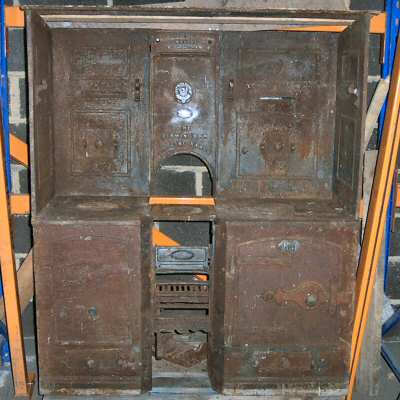
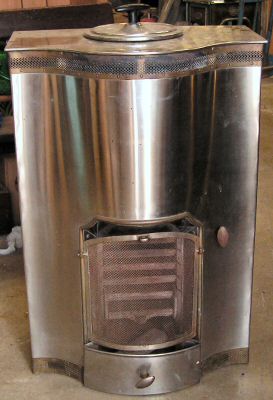
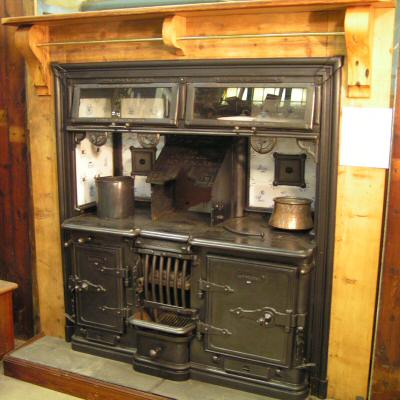
Moreton in Marsh, Gloucestershire UK - A monstrous gold medal Victorian 'Eagle Range', complete with tiled back and glass fronted plate warmers is top among the twenty or so lots of stoves, ranges and range surrounds, for sale at the upcoming auction (see catalogue) at Cox's Yard. There is a stainless steel 1920's Pither stove, ideal for smokeless fuel and now very trendy, a Musgrave and a Godin, and 'The Birmingham' by Hassell & Singleton, there are stillages of range bits, and a Horton stone range surround. The sale takes place this Friday and Saturday, 22nd and 23rd September. Most of the lots in this sale are no reserve, so get down and grab some bargains. Everything, including the kitchen sink will be for sale, from flooring through doors to fireplaces and garden troughs, oak beams and radiators, stoneware, panelled rooms, staircases and woodwork.
Monday, May 22, 2006
Hots spotkins
The scariest web page in the world? Architectural Antiques of Hammersmith fireplace page.
Subscribe to:
Posts (Atom)
Featured
Drummond Shaw interviewed in 2008
Hindhead, Surrey UK - DRUMMOND Shaw of Drummonds Architectural is interviewed by Thornton Kay of Salvo in the back yard of his Hindhead, Su...

-
 Above: the Tree-Trunk garden house Piet Hein Eek specialises in making furniture from waste material from the industry and nature. He also u...
 -
Richard Billington an antique fireplace and mantelpiece expert working for Westland London gives advice on how to care for antique fireplace...
-
Milton Common, Oxfordshire UK - LONDON Architectural Salvage & Supply Co Ltd, aka Lassco, having spent the last few years repositi...